Earl Warren Quotes
The segregation of white and colored children in public schools has a detrimental effect upon the colored children. The impact is greater when it has the sanction of law: for the policy of separating the races is usually interpreted as denoting the inferiority of the negro group.
Earl Warren, 1891-1974, Chief Justice, U.S. Supreme Court, Governor of California (Republican), Republican Vice Presidential Candidate (with Dewey), Brown v. Board of Education of Topeka, 1954
Sourced by: Eigen's Political and Historical Quotations

Berea College in Kentucky was founded as an interracial college. This law made it illegal in Kentucky to operate an integrated college. Day was not only a racist but a sexist as well. He introduced and got it passed another education law that made co-education in Kentucky illegal


Sumner would later become a Senator. However over a century before Brown v. Board of Education finally outlawed segregated schools, Sumner made one of the basic legal arguments that was involved in the case.

It is not desirable to See Samson Benderly for an earlier, similar view.


This became one of the most widely quoted statements of the 1960s and 1970s.


Illegal school racial segregation is no more, but the schools are still racially segregated. The concept of neighborhood schools makes the school population dependent on the residential population in any given area. And housing segregation is the rule in most of America—come caused illegally, but much the result of economic clustering of housing, customs, and ethnic communities. Therefore schools are still racially segregated except in those areas where housing is racially integrated.

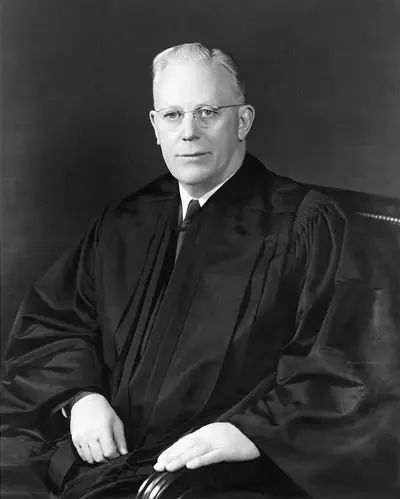
Earl Warren was an American politician and jurist who served as 30th governor of California from 1943 to 1953 and Chief Justice of the United States from 1953 to 1969. The "Warren Court" presided over a major shift in American constitutional jurisprudence, which has been recognized by many as a "Constitutional Revolution" in the liberal direction, with Warren writing the majority opinions in landmark cases such as Brown v. Board of Education (1954), Reynolds v. Sims (1964), Miranda v. Arizona (1966) and Loving v. Virginia (1967). Warren also led the Warren Commission, a presidential commission that investigated the 1963 assassination of President John F. Kennedy. He is the last chief justice to have served in an elected office before entering the Supreme Court, and is generally considered to be one of the most influential Supreme Court justices and political leaders in the history of the United States.
