Albert J. Beveridge Quotes
The rule of liberty that all government derives its authority from the consent of the governed, applies only to those who are capable of self government. We govern the Indians without their consent, we govern our territories without their consent, we govern our children without their consent.
Albert J. Beveridge, 1862-1927, U. S. Senator (Republican, IN), Founder, Progressive League, Speech, Indianapolis, September 16, 1898
Sourced by: Eigen's Political and Historical Quotations


Even in the early days of our Republic, many people were hostile to the government that they had created, Adams, a politician with a very thin skin, was insulted by the public criticizing the government after having elected it. His concept was that the public should elect their representatives and leaders and then live with what the representatives and leaders do. He in particular came in for much public criticism and insult and even passed laws – the Alien and Sedition Acts – making it illegal to verbally attack the government.

French Canadian separatists had begun a movement for an independent Quebec. The area that was to be an independent nation, however, included the land of several Indian tribes including the Cree. They insisted on the same right of self-determination within Quebec as the French Canadians claimed within Canada. Their opposition among others led to the failure of the Meech Lake Accord.

Alaska was then a territory and not yet a state. See {637486} for Eleanor Roosevelt’s then contemporaneous statement on statehood.

This quotation is very interesting in that many of Mrs. Roosevelt’s detractors constantly accused her of being a communist. They obviously had not read this column of any of the many where she shows antipathy to Communism.


In Philadelphia, the state delegates had just started to vote for independence. The majority of each state delegation determined the vote for the state. Delaware had three delagates, but only two were in Philadelphia. Rodney, the third delegate from Delaware, had been attending a meeting in Dover when he received word that the other two Delaware delagates Thomas McKean and George Read were split—McKean for and Read against independence. Rodney immediately left for Philadelphia late on July 1. He rode all night in a thunderstorm to traverse the 80 miles to Philadelphia. He arrived in his spurs and riding boots and cast his famous vote and thus Delaware voted for Independence. After the vote, the next 2 days were spent drafting the Declaration of Independence and Rodney signed it on July 4. After Rodney returned to Delaware, he was ousted in the next election by conservative loyalists who felt that Rodney had betrayed them and England.

At the time Democracy as a form of government meant citizens voting for their own laws—not their representatives. Today we call that “Direct Democracy” as in a New England Town Meeting.


In the struggle for political power, this is often forgotten. During the Barak Administration, the President proposed measures that had been introduced and supported by his Republican opponents earlier. But they then not only failed to support them but often filibustered in the Senate to block them. The Democrats failed to support some of their ideas when President Eisenhower introduced them.


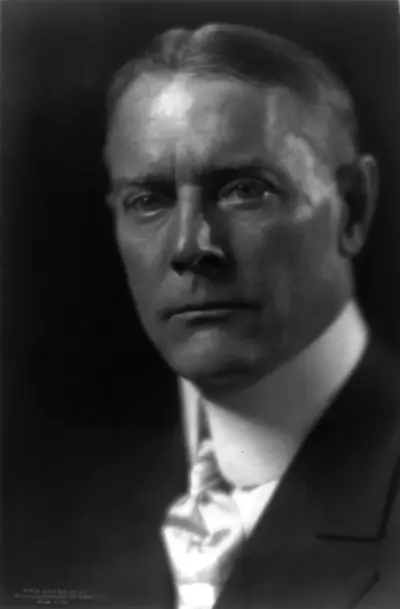
Albert Jeremiah Beveridge was an American historian and US senator from Indiana. He was an intellectual leader of the Progressive Era and a biographer of Chief Justice John Marshall and President Abraham Lincoln.
