Hideki Tojo Quotes
The reason was the failure of both Japan and China to understand each other and the inability of America and the European powers to sympathize, without prejudice, with the peoples of East Asia.
Hideki Tojo, 1884-1948, Japanese General & Prime Minister, Quoted in The Journal of Historical Review, 1992
Sourced by: Eigen's Political and Historical Quotations


He had just returned from a trip abroad.


Some historians believe that with this quotation, Japan perceived that it had a “green light” from America to dominate Asia. It was further reinforced when Roosevelt later refused to object or intervene when Japan seized control of Korea.


In the 1920s and 1930s China was in chaos. Chiang Kai-shek and his Nationalists were officially the government but there was extensive corruption and local “leaders” who fought for control of territories and resources. Chinese were slaughtering each other daily not unlike Bosnia in the 1990s. The Japanese had moved into Manchuria using the pretext that they were saving China by bringing order and security. (In reality they were trying to control additional territory to populate with their rapidly expanding population.) The U.S. opposed the Japanese aggression but privately warned the Chinese Nationalists that they had better get control of the nation. The Nationalists never did. The Japanese expanded into much more of China beginning WWII in Asia. The Nationalists and the communists joined forces to fight the Japanese and after the war, the communists won the allegiance of most of the people. The Chinese government was finally unified, but under the communists.


She had gone to Europe where the 2nd World War was raging.

This was the 14th part of the Japanese reply to a previously made American peace proposal. The Japanese policy was to unite all of Asia into a co-prosperity sphere controlled by Japan where Japan would militarily conquer those Asian countries which did not “voluntarily” want to join. The Japanese were in the process of conquering China and the United States and Britain had embargoed oil and other material to Japan trying to pressure them to withdraw their troops from China and cease Japanese conquest by force. Japan believed that it was their right to conquer and control Asia and it was beneficial to the region, and that the U. S. and Britain had no right to curtail the expansion that Japan required to assure raw materials and other necessities. At the very time that these negotiations were on going, the Japanese fleet was sailing for the sneak attack on Pearl Harbor. The attack took place the very day this part of the Japanese reply was received.

Although, on sever occasions Mao tried to reach out to the United States, the fact that he was leading a communist movement and Chiang Kai-shek, our recognized ruler of China hated Mao caused his overtures to be rebuffed. American military leaders knew very little about China and our intelligence was almost non-existent. They assumed that he was under the control of Russia and Joseph Stalin when in fact, the Russians wanted to oust Mao for not following Stalin’s communist orthodoxy. They succeeded in firing him as head of the party and replacing him with a committee of more loyal communists. Not only did the US rebuff Mau’s outreach attempts, but American money and military material financed 6 different military campaigns by Chiang to exterminate Mao and his communists.
None succeeded as the vast majority of the peasants supported Mao and his troops and provided support and information in Chiang’s attempts. Some historians believe we “bet on the wrong horse”.


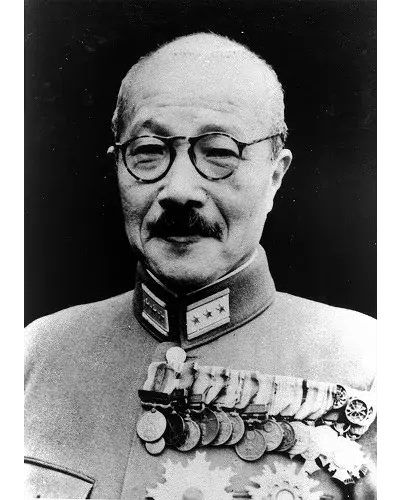
Hideki Tojo was a Japanese politician and general of the Imperial Japanese Army (IJA) who served as Prime Minister of Japan and President of the Imperial Rule Assistance Association for most of World War II. During his years in power, he assumed several more positions including Chief of Staff of the Imperial Army before ultimately being removed in July 1944.
