Glenn Hubbard Quotes
The real question is “What can we do to improve the earnings of lower- and middle-income Americans?” That’s about increased education and skills training, and that may require higher government spending.
Hubbard is one of the few 21st century Republican economists who was concerned about lower- and middle-class earnings, and one of the very few who ever advocated increasing government spending at all, much less for this purpose. In the 1950s to the 1970s, this was a common view of many Republican economists and politicians, but in the next 40 years, the Republican party moved away from its Lincoln and liberal traditions, and even became the party of choice for racists.
Glenn Hubbard, Economist, Chairman White House Council of Economic Advisers (George W. Bush), Quoted in New York Times Magazine, May 6. 2013
Sourced by: Eigen's Political and Historical Quotations


He was concerned that if steps were taken to protect the environment and they slowed or shrank economic growth, the burden would fall disproportionately on the poor.

At the time of this quotation, the nation had gone through more than 3 decades of enormous increase in prosperity for the wealthy, and modest gains for the highly skilled, technically trained workers. However, correcting for inflation, average salaries did not increase at all. The middle class was particularly hard hit. Only 20 percent of the population benefitted from the growth at all; however, the 1 percent had rarely prospered more. Kenworthy’s principle did not apply for this period of American history.


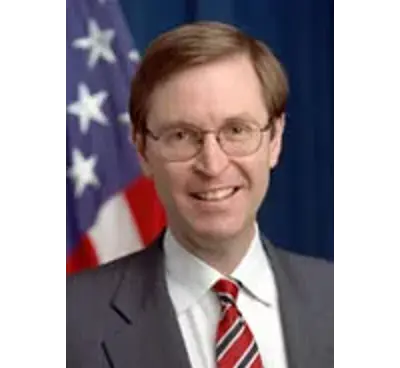
Robert Glenn Hubbard is an American economist and academic. He served as the Dean of the Columbia University Graduate School of Business from 2004 to 2019, where he remains the Russell L. Carson Professor of Finance and Economics. On September 13, 2018 he announced that he would retire from his position after his contract expired on June 30, 2019. Hubbard previously served as Deputy Assistant Secretary at the U.S. Department of the Treasury from 1991 to 1993, and as Chairman of the Council of Economic Advisers from 2001 to 2003.
