Walter Lippmann Quotes
The radical novelty of modern science lies precisely in the rejection of the belief... that the forces which move the stars and atoms are contingent upon the preferences of the human heart.
Lippmann, Walter. A Preface to Morals. Macmillan, 1929, p. 122.


Much of modern science involves non-intuitive concepts that can rarely if ever be discovered using common sense. It was hard enough for most people to accept the notion of an infinite number, but now we know that there are many infinite numbers and they are all different form one another. Darwinian thinking was contrary to most learned thought of the day, and even much public opinion today. Even Albert Einstein had to struggle to comprehend the findings of Quantum Mechanics which are very non intuitive—one object can be in two different places at the same time. Meanwhile, most people are totally unaware that the world around is does not correspond to normal human intuition and common sense. Yet these are the same and only tools that we continue to use in making decisions about our society. And the fundamental truths of yesterday, the foundation of past thinking and glory, are the naïve simplifications and errors of today and become the superstitions of tomorrow.

Citizen of U. S. & Israel


While not all scientists are atheists, some are. Haldane was one of the classic atheists who would talk about his religious views publicly.

Scientists themselves contain religious believers as well as atheists and agnostics, While there are a number of scientists who argue against religion, there are many who do not and are believers. Albert Einstein, for example, was a believer in a universal God. See {631763}.


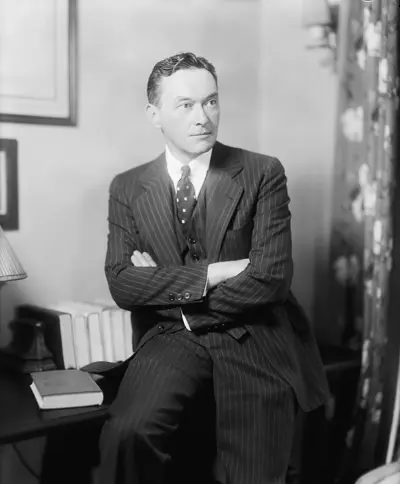
Walter Lippmann was an American writer, reporter and political commentator. With a career spanning 60 years he is famous for being among the first to introduce the concept of Cold War, coining the term "stereotype" in the modern psychological meaning, as well as critiquing media and democracy in his newspaper column and several books, most notably his 1922 book Public Opinion.
