Margaret Mead Quotes
The prophet who fails to present a bearable alternative and yet preaches doom is part of the trap that he postulates.
Margaret Mead, 1901-1978, Anthropologist, Culture and Commitment, 1970
Sourced by: Eigen's Political and Historical Quotations

In 2005 an Egyptian writer, Usama Anwar Ukasha, criticized one of the Prophet’s companion’s role for causing dissention and divisiveness in Islamic history. Some called for his legal punishment for slandering a holy figure (see {588714}) and a law case was brought to force him to divorce his wife—so that she would not be “contaminated by his heretical thoughts. Al-Bana argued for freedom of thought and speech on such subjects. His view was particularly important since he was the brother of Hassan Al-Bana, the founder of the Muslim Brotherhood, a powerful fundamentalist organization. Note that Al-Bana’s call for intellectual freedom does not go so far as to say that it should be legal to criticize The Prophet Muhammad and it illustrates how far even modern Islam has to go to meet reasonable standards of freedom of thought and speech.

Jorge Mario Bergoglio


His most influential teacher was the English philosopher and feminist, Annie Besant, 1847-1933. See her quotations for some parallel ideas.
Al-Maarri’s quotations are not only meaningful in their own right, but they illustrate the openness and free thinking that was allowed in the early days of Islam before about 1100. If anyone wrote such things today in most Islamic countries he would at least be jailed if not executed for blasphemy. And if any Christian in Europe made the same statement, he would have been excommunicated at least if not tortured and murdered.

Young had been monogamous for 18 years when Church founder and leader Joseph Smith ordered him to take more wives.

These lines were often quoted by British leaders during the dark days of the beginning of WWII.


This quotation is one of the great religious ecumenical statements of history. Mani’s religion became extinct. Zoroaster was the prophet who founded the religion of Persia that preceded Islam and still has some followers. Like Judaism and Christianity, it is allowed under Islam as Mohammad had a large part of the Middle East who followed that religion.

In the last centuries, Egypt has been intellectually more advanced than the other Arab countries. It has a significant number of modernists who oppose religious influences on Government. During the Arab Spring when the old regime was ousted, the modernists had hopes that a modern democracy would be formed that was not controlled of even significantly influences by religious leaders and where women would have equal rights. However, the first election the Muslim Brotherhood, a religious party won, and then tried to institute Islamic law—Sharia. A coup ousted the Muslim Brotherhood, and then many dreamed again of a modern, non-sexist, secular democracy. Professor Ajami tried to give them a more realistic view.


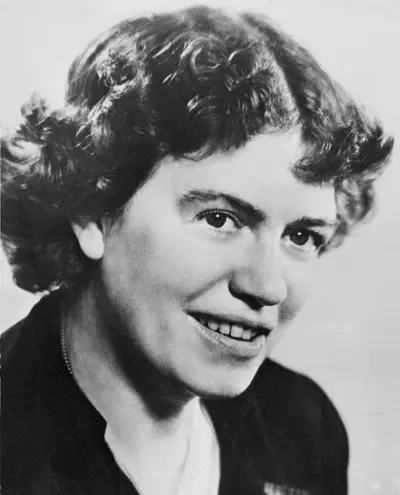
Margaret Mead was an American cultural anthropologist who featured frequently as an author and speaker in the mass media during the 1960s and 1970s. She earned her bachelor's degree at Barnard College in New York City and her MA and PhD degrees from Columbia University. Mead served as President of the American Association for the Advancement of Science in 1975.
