Oswald Spengler Quotes
The press today is an army with carefully organized weapons, the journalists its officers, the readers its soldiers. But, as in every army, the soldier obeys blindly, and the war aims and operating plans change without his knowledge. The reader neither knows nor is supposed to know the purposes for which he is used and the role he is to play. There is no more appalling caricature of freedom of thought. Formerly no one was allowed to think freely; now it is permitted, but no one is capable of it any more. Now people want to think only what they are supposed to want to think, and this they consider freedom.
Sourced by: Eigen's Political and Historical Quotations


Prior to Germany Declaring War on the United States, there was a small but influential group of American Fascists who were great admirers of Hitler and Mussolini and the “reforms” they had made in Germany and Italy. They saw Germany’s invasion of other European nations as a good think to “reform” Europe. The opposed American support of England and U. S. entry into the war. Their influence waned after Pearl Harbor and Germany declaring war on the U. S. Many of them arose again after WWII ended but they no longer expressed admiration for Hitler and Mussolini—concentrating at that time on anti-communisim. This caused some difficulties for the majority of anti communists who were also anti fascists.


Haldeman had actually called the network executives on several occasions regarding Cavett’s show. Nixon was particularly furious when Cavett interviewed John Kerry, the decorated soldier who had thrown his medals away in protest to the handling of the Vietnam War. Nixon wanted some stronger actions taken.


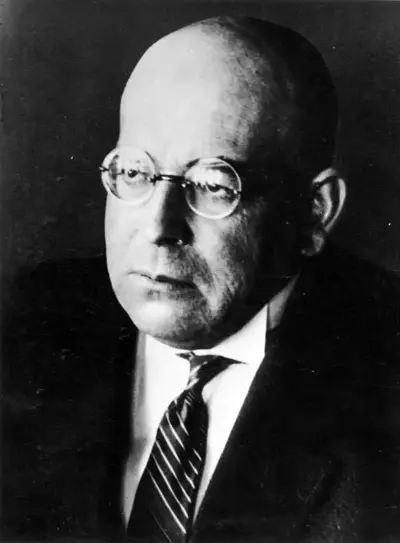
Oswald Manuel Arnold Gottfried Spengler was a German historian and philosopher of history whose interests included mathematics, science, and art and their relation to his organic theory of history. He is best known for his two-volume work, The Decline of the West (Der Untergang des Abendlandes), published in 1918 and 1922, covering all of world history. Spengler's model of history postulates that any culture is a superorganism with a limited and predictable lifespan.
