Henry L. Stimson Quotes
The President wants a warning message sent to the Philippines!
General Gerow was army chief of staff George Marshall’s deputy. President and the Secretary of state or worried that Japan might attack American forces in the Pacific. They thought the Philippines might be in imminent danger. Military intelligence did not agree with their political assessment. So the army temporized by drafting a general alert to all Pacific forces. FDR wanted a more specific war warning sent and the Secretary of War to carry the message. The army did then send a mild warning message to the Philippines as well as other facilities and an even milder message to Pearl Harbor. See {589278}. The commanding general and Admiral of Pearl Harbor paid little attention to the ambiguous message and ten days later the Japanese attacked Pearl Harbor. The Philippines were invaded subsequently.
Henry L. Stimson, 1867-1950, U. S. Secretary of State (Republican), U. S. Secretary of War, Governor General, Philippine Islands, Statement to General Gerow, November 27, 1941
Sourced by: Eigen's Political and Historical Quotations

Some say that President Roosevelt had instructed the war department to issue warnings to the military forces in the Philippines and the Pacific. Military intelligence argued against the Japanese attack on the Philippines—and did not think any attack anywhere very likely. When the president insisted, warnings went out and this is what was sent to General Short. The warning was ambiguous and Short did very little and was caught unprepared shortly thereafter. How much reliance should be placed on intelligence estimates has been a question that has been argued before World War II and after.


The existing treaties of many of the different European countries like the NATO Treaty obliged them to assist their allies if they were involved in war. Once Austria attacked Serbia, Russia had to assist Serbia against Austria. Germany then joined with Austria and that triggered the treaty whereby France had to support Russia. And when Germany overran Belgium to attack France, England was obligated to come to Belgium’s defense. The only country that had planned for and wanted war was Germany who used her obligation to Austria as the excuse to implement her war plans (see {642092}). The entire Western World was at war when all but one nation wanted to avoid war. The communications and diplomacy of the time could not keep up with events and one of the worst wars in history ensued.


He served Presidents Reagan, Clinton, and both Bushes


The “proofs” were diplomatic assurances—treaties—that England would guarantee the territorial integrity of Belgium. The British made strong diplomatic efforts to persuade Germany not to occupy Belgium. The German’s none the less send armies in under the excuse that if they did not, the French would occupy the country and have a strategic advantage over them. Diplomacy could do no more good. England had to send troops or renege on its obligations. So England was in WWI.

What he does not consider is that a large number of Americans don’t want their government having grand strategies if there is no threat to the United States or no critical national interest. For them crises and threats are all that should occupy our foreign affairs.


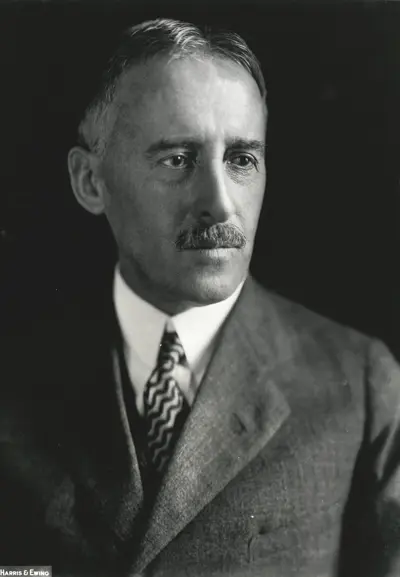
- Born: September 21, 1867
- Died: October 20, 1950
- Nationality: American
- Profession: Statesman
Henry Lewis Stimson was an American statesman, lawyer, and Republican Party politician. Over his long career, he emerged as a leading figure in U.S. foreign policy by serving in both Republican and Democratic administrations. He served as Secretary of War (1911–1913) under President William Howard Taft, Secretary of State (1929–1933) under President Herbert Hoover, and Secretary of War (1940–1945) under Presidents Franklin D. Roosevelt and Harry S. Truman.
