Peter Drucker Quotes
The postwar (WWII) GI Bill of Rights--and the enthusiastic response to it on the part of America's veterans--signaled the shift to the knowledge society. Future historians may consider it the most important event of the twentieth century.
Peter Drucker, Management Expert, Managing in a Time of Great Change, 1995
Sourced by: Eigen's Political and Historical Quotations


Commenting on the GI Bill of Rights when FDR signed it:

Note that he included all youth who were not slaves, not just the rich or the nobility. This was one of the earliest beginnings of public education." ""the Great


The returning GIs were entitled to have their tuition paid under the GI Bill of Rights. American educators were faced with a different population than what they were used to. These students were older and much more mature than the 17-19 year old regular students entering college. And they had been fighting a war since their high school education and their academic skills were rusty. With the Federal payment of tuition, the veteran students had a much more diverse socioeconomic background, and many did not have a very strong high school education to begin with. For a school like Brown, most of the veterans could not meet the usual entrance requirements. Brown and a few other schools created a special program where the veterans could refresh their high school work and take preparatory courses so that they could meet the school’s regular program requirements. It was called the “Veterans’ College”, and was designed for 2 years of study and then the veterans would enter regular college. The program and the others like it were very successful. The veterans worked much harder than the regular younger students. At Brown, of the 486 students attending Veterans’ College, 142 were admitted to the regular college after only 1 semester rather than the 2 years.


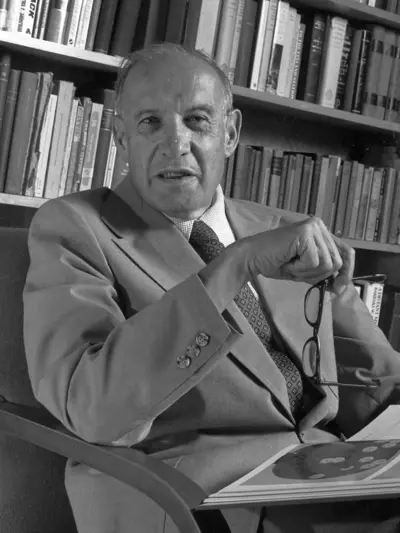
Peter Ferdinand Drucker was an Austrian management consultant, educator, and author, whose writings contributed to the philosophical and practical foundations of the modern business corporation. He was also a leader in the development of management education, he invented the concept known as management by objectives and self-control, and he has been described as "the founder of modern management".
