Richard Wagner Quotes
The patriot subordinates himself to his State in order to raise it above all other States and thus, as it were, to find his personal sacrifice repaid with ample interest through the might and greatness of his fatherland.
Wagner, Richard. Richard Wagner's Prose Works, Volume 4: Art and Politics. Translated by William Ashton Ellis, Kegan Paul, Trench, Trübner & Co., 1895, p. 13.


Ataturk had been a military hero, but was very much opposed to war and military adventurism not unlike the Dwight Eisenhower and Colin Powell type leaders. However, the one thing that he thought worth the sacrifice of his own and other Turkish lives was Turkish independence and sovereignty. Historically, the Ottoman Empire which Ataturk finally ended, had dominated half of Europe and all of the Mid East at the cost of sovereignty of other nations and Ataturk saw no more important virtue with dying for than national sovereignty. See {125322} and {584501}.


He had been attacked by the extremists in his own party for serving as the Ambassador to China during a Democratic administration. Huntsman, fluent in Chinese and very familiar with Chinese culture, was a very successful Governor and was recognized by President Obama as being uniquely qualified and as a Patriot he made this great statement about service to country


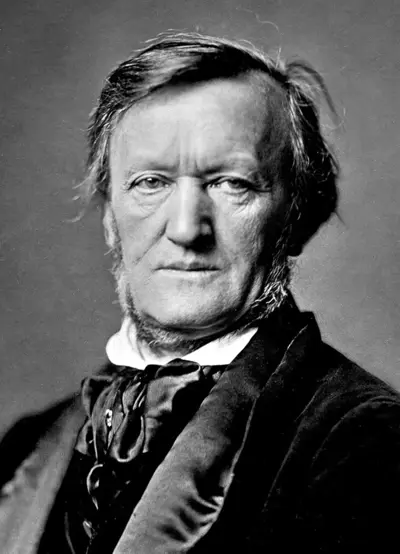
Wilhelm Richard Wagner was a German composer, theatre director, polemicist, and conductor who is chiefly known for his operas (or, as some of his mature works were later known, "music dramas"). Unlike most opera composers, Wagner wrote both the libretto and the music for each of his stage works. Initially establishing his reputation as a composer of works in the romantic vein of Carl Maria von Weber and Giacomo Meyerbeer, Wagner revolutionised opera through his concept of the Gesamtkunstwerk ("total work of art"), by which he sought to synthesise the poetic, visual, musical and dramatic arts, with music subsidiary to drama. He described this vision in a series of essays published between 1849 and 1852. Wagner realised these ideas most fully in the first half of the four-opera cycle Der Ring des Nibelungen (The Ring of the Nibelung).
