Arthur Miller Quotes
The parochial snobbery of these people was partly responsible for their failure to convert the Indians. Probably they also preferred to take land from heathens rather than from fellow Christians. At any rate, very few Indians were converted, and the Salem folk believed that the virgin forest was the Devil's last preserve, his home base and the citadel of his final stand. To the best of their knowledge the American forest was the last place on earth that was not paying homage to God.
Miller, Arthur. The Crucible. Viking Press, 1953, p. 5.

Nigeria was about equally divided into Muslims who dominated the North and Christians and Animists who dominated the South. The former were intent on making Sharia—Islamic Law—the law of the nation and the latter were equally passionate to avoid it. Muslim protests got very violent including murdering innocent civilians; the Christians threatened to retaliate.


Damn this world, Damn this time. Damn this fate That uncivilized Arabs have come to make me a Moslem
This is a huge epic poem that he wrote over several years. At the time, the Persians considered themselves far more civilized and sophisticated than the Arabs who were but tribesmen. They really resented the fact that it was the Arabs that brought Islam. And before, most of the Persians worshipped Zoroaster. Although Islam spread faster and further than any religion in history, it was not always easily accepted as this stanza of the poem indicates. There is to this day a superiority that the Iranians perceive over the Arabs. And to this day, many Arabs resent the Iranians for this attitude.


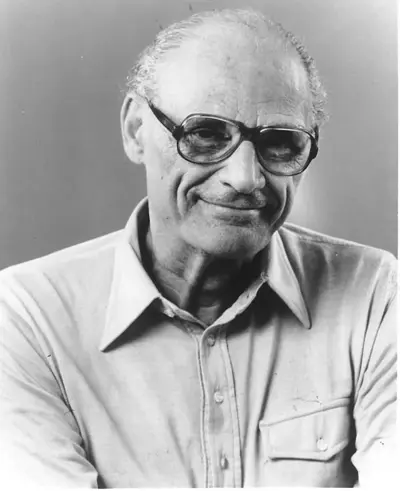
Arthur Asher Miller was an American playwright and essayist in the 20th-century American theater. Among his most popular plays are All My Sons (1947), Death of a Salesman (1949), The Crucible (1953), and A View from the Bridge (1955, revised 1956). He wrote several screenplays and was most noted for his work on The Misfits (1961). The drama Death of a Salesman has been numbered on the short list of finest American plays in the 20th century.
