Eleanor Roosevelt Quotes
The outstanding factor in their program is the use of the schools. Instead of closing them at four o'clock, they remain open and become community centers. Classes of every description go on just as they do all day, and recreational programs are carried out.
In the midst of the Great Depression there were many innovative, efficient uses of public facilities as the country struggled to get back on its economic feet. However, 80 years later, neither Flint nor other American cities used school buildings for more purposes and kept them open more hours. People suggested the idea as if it was new and never thought of before. When the Great Depression crises was over, many of the excellent, efficient programs were dropped instead of continued. Most school buildings closed by 3 PM in much of the country.
Eleanor Roosevelt, 1884-1962, First Lady (Franklin Delano Roosevelt), Description of an innovative program of school building use in Flint, Michigan, U. S. Delegate to the United Nations, Column, My Day, November 20,1936
Sourced by: Eigen's Political and Historical Quotations

Substitute “Boy Scouts” for “Young Pioneers” and the letter might have easily applied to America as Russia.


This was done and the practice accelerated widely during the 2nd World War when new building construction was limited by shortages. Some communities use school buildings for multiple purposes. The most frequent use nationwide however has been for polling places in elections.


The Black publisher appears to be the first to have made what became a “common argument” a century later.


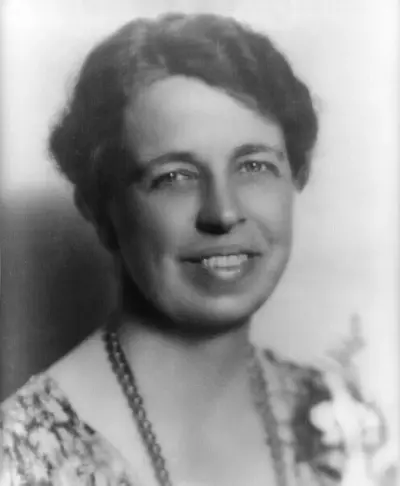
Anna Eleanor Roosevelt was an American political figure, diplomat and activist. She served as the First Lady of the United States from March 4, 1933, to April 12, 1945, during her husband President Franklin D. Roosevelt's four terms in office, making her the longest-serving First Lady of the United States. Roosevelt served as United States Delegate to the United Nations General Assembly from 1945 to 1952. President Harry S. Truman later called her the "First Lady of the World" in tribute to her human rights achievements.
