Alfred Nobel Quotes
The only true solution would be a convention under which all the governments would bind themselves to defend collectively any country that was attacked.
Fant, Kenne. Alfred Nobel: A Biography. Arcade Publishing, 1993, p. 277.


He was referring to NATO in Post WWII Europe.


Article 9 of the 1946 Japanese constitution that was imposed on Japan {604739} severely limited Japan’s military. Emperor Hirohito asked privately how Japan would be protected.


This was the first time a Cabinet Member had ever addressed Congress. He had just concluded an alliance with Soviet Russia for fighting Hitler and Japan in the Second World War. Some were uneasy about an alliance with the Communist state. However, the Congress approved overwhelmingly.
One major problem at the time was that the Soviet Union was supporting and instigating revolutions in many parts of the world. When most nations of the UN wanted to provide peace keeping troops to quell the conflict, the Russians would veto and block the effort, Vandenberg wanted the UN to change the rules regarding the veto. The original right of veto for the major nations was originally included at the insistence of the United States and many Americans did not want to give it up or have any exceptions lest there be more. The Russians at that time also did not want to give up any of their veto powers. Another method that Vandenberg wanted to solve the Russian peacekeeping blockage problem was for America to engage in more collective security pacts so that action could be taken without UN Security Council unanimity by going around the UN.

The reality of course was that NATO was created primarily to prevent Russia from dominating Europe. Baker could not officially state that. There are many experts who believe that if Russia had been allowed to join NATO after the breakup of the Soviet Union, relations with Russia may have been better. However, the NATO charter gives each member nation a veto over activities and there was little trust in Russia by most of the NATO members.

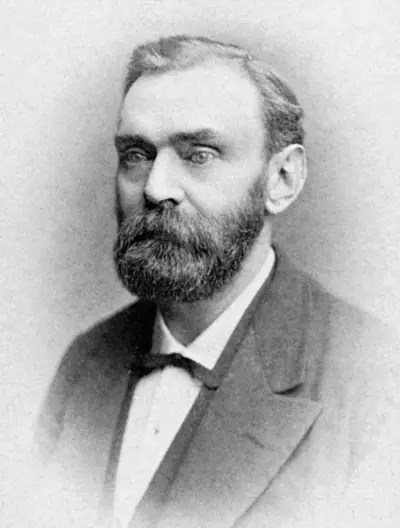
Alfred Bernhard Nobel was a Swedish chemist, engineer, inventor, businessman, and philanthropist. He held 355 different patents, dynamite being the most famous. He owned Bofors, which he redirected from its previous role as primarily an iron and steel producer to a major manufacturer of cannon and other armaments. Having read a premature obituary which condemned him for profiting from the sales of arms, he bequeathed his fortune to the Nobel Prize institution. The synthetic element nobelium was named after him in the second half of the 20th century. His name also survives in companies such as Dynamit Nobel and AkzoNobel, which are descendants of mergers with companies that Nobel established.
