Charles Horner Quotes
The nuclear weapon is obsolete. I want to get rid of them all.
Lancaster, John. "U.S. General Backs Elimination of Nuclear Arms." The Washington Post, 16 July 1994, p. A1.


See {633890} regarding the nuclear accidents at that time.


1st Earl Mountbatten of Burma


This was his last publication. He died of a heart attack as the magazine was being printed. Since this was written one other possible use of nuclear weapons has been suggested—namely, retaliation for a biological attack. From a policy point of view, maintaining an arsenal of biological weapons for retaliatory purposes is dangerous and use for retaliation of biological weapons is not very controllable and arguably less humane than a nuclear weapon. His point however still holds. We have to have a national defense policy against many threats and we have to have defense policies that handle all these without nuclear tactics is insufficient to handle any of the threats without causing more problems and we have other weapons and techniques that are just as, if not more, effective. They and systems under development have the major role in our current defense policy.


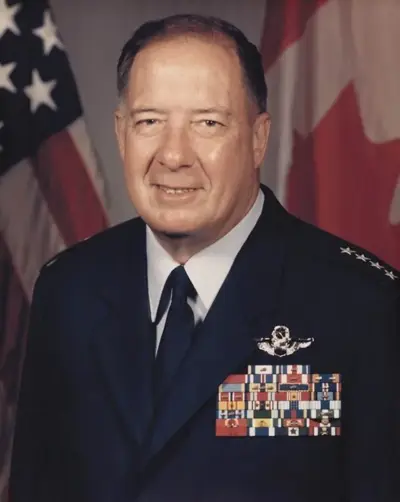
Charles Albert Horner is a retired United States Air Force four-star general. He was born in Davenport, Iowa and attended the University of Iowa, as part of the Air Force Reserve Officers' Training Corps program. On June 13, 1958, Horner was commissioned into the Air Force Reserve. During the Vietnam War, he flew in combat as a Wild Weasel pilot and received the Silver Star. During Operation Desert Shield and Operation Desert Storm, he commanded the American aerial forces, as well as those of the American allies. During the Desert Shield phase of the conflict, Horner briefly served as Commander-in-Chief — Forward of United States Central Command; while General Norman Schwarzkopf, Jr. was still in the United States. He currently serves on the board of directors for the United States Institute of Peace.
