Alexandra Kollontai Quotes
The new woman is essentially an independent labour unit whose energy is used not to serve the interests of a private family economy, but to perform socially useful and necessary labour.
Alexandra Kollontai, 1873-1952, Russian Commissar for Social Welfare, “What Has the October Revolution Done for Women in the West?” Ogonyok. No. 41, October, 9, 1927
Sourced by: Eigen's Political and Historical Quotations

This question he asked of an interviewee was at the time not even considered offensive of patronizing and women and men who advocated careers for women would try to explain that women could do both. Very few would counter with the point that what about men and their “neglect” of family life or the reality that through the entire Second World War MILLIONS of women were working. This quotation illustrated the culture change in the years since then.


In 1927 there was a Peasant Uprising in the Hunan Province of China. Young Mau went there and wrote a report. This observation of the lesser domination of the husband where women work, has been found to be the case in almost all societies and economic systems. The result has been great resistance to equal pay for women as the consequences have been far more than just fairness. It changed the power relationship in families, political structures, communities, and changed the manpower requirements of entire societies. For example, by the end of the 20th century in America if most women did not work outside the home, the economy would collapse or immigration would have to be hugely expanded. In 20th century America, advocates of female equality have often been accused of being communists, as it was the communists who first observed this phenomenon and used it to change the society.


Many of the most liberated and accomplished women in history have been from wealthy families. And yet with all their money they could only go so far. They needed an entire movement of women of all classes—and men to finally attain suffrage and the progress made thus far. Wealthy women were very active, alongside with working and middle class women in most of the demonstrations and campaigns for women’s rights.


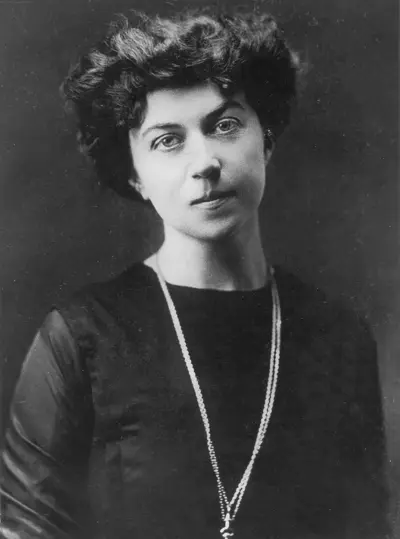
Alexandra Mikhailovna Kollontai was a Russian revolutionary, politician, diplomat and Marxist theoretician. Serving as the People's Commissar for Welfare in Vladimir Lenin's government in 1917–1918, she was a highly prominent woman within the Bolshevik party and the first woman in history to become an official member of a governing cabinet.
