Ellsworth Huntington Quotes
The Negro, however, has been tested on an extensive scale.
Huntington, Ellsworth. The Red Man's Continent: A Chronicle of Aboriginal America. Yale University Press, 1919.

Vladimir Lenin. In their quest for world revolution, the Russian Communists had more problems with arguments in the United States whose reforms and economy had produced a very high standard of living. They knew that to effect a revolution, they had to reach the middle class and the intellectuals. They had little economically to attack America with but they were able to attack the United States morally. Even though segregation was legal in America at that time, many Americans thought it immoral. Most of the rest of the world did also. So that was one of the attack points. Since the communists opposed U. S. racial segregation, many Southern segregationists used a perverted logic and accused everyone who opposed segregation of being a communist. In addition to racial segregation, the Communists attacked other forms of discrimination such as anti-Catholic, anti-Asian, and anti-Semitic (See {638737} ) behavior.


Armstrong rarely commented on politics (see {615854}), but the Governor defying the Supreme Court and not letting his people even go to school with other students was too much for him. He not only made the statement, but he approved it for publication. This shocked many who knew him as an apolitical person. He was particularly distressed with President Eisenhower who although he had warned Faubus that he would enforce the court order and then used federal troops to do so, Eisenhower was a man of action and not rhetoric and his lack of firm public statements overlooked an opportunity to use the Presidential “bully pulpit” and exercise his moral leadership and authority. Many then, and even 50 years later, were not sure where he stood on the issue of school desegregation. See {615852}.


Reconstruction was the period in the South after the Civil War. The change that emancipation brought to the white South was traumatic, and there was a constant struggle between those who wanted the Blacks to be integrated into Southern Society—and those Southerners who wanted to create a society that would be as close to slavery as possible, So the Klu Klux Klan and other terrorist organizations formed and with lynching and other intimidation, much of the initial progress of Reconstruction was rolled back and did not get reinstated until the Civil Rights and Voting Rights Acts were passed in 1964.


This quotation illustrates the degree or irrationality that Southerners practiced in considering racial matters. Lee was stating what virtually all Southern “Gentlemen” believed. Here was a class of people who had hardly worked at day in their lives opining on the work attitudes of the class of people who did most of all the work in the South. The Southern Whites not only expected the Negro slave to do the work, but to be enthusiastic about working. And it never even occurred to Lee and most of the other whites that Negro lack of “disposition” to work was the result of the fact that they were forced to work with the benefits going to someone else. It was a character flaw in Blacks, if they were not enthusiastic and disposed to work when forced to. One of the few ways a slave could register his/her protest was to beat the system now and then and do as little work as possible. Free Blacks in the North were among the hardest and most enthusiastic working people in America—certainly moreso than the Southern white gentlemen.


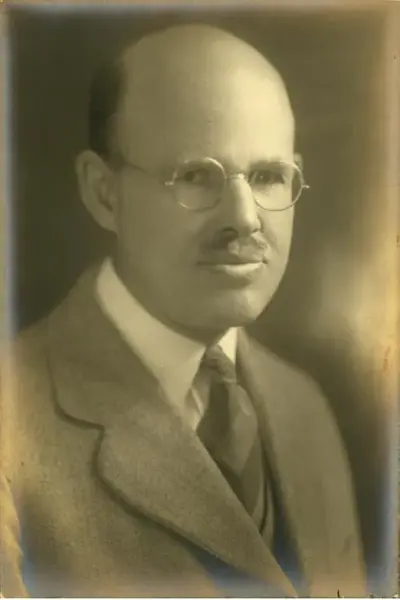
Ellsworth Huntington was a professor of geography at Yale University during the early 20th century, known for his studies on environmental determinism/climatic determinism, economic growth, economic geography, and scientific racism. He served as President of the Ecological Society of America in 1917, the Association of American Geographers in 1923 and President of the Board of Directors of the American Eugenics Society from 1934 to 1938.
