Denmark Quotes
The Members of the Parliament shall be bound solely by their own conscience and not by any directions given by their electors.
This is a formal codification of the position that was made by the great orator Edmund Burke: {194922}.
Danish Constitution, Section 56, June 5, 1953
Sourced by: Eigen's Political and Historical Quotations


There was a belief among some anti-Federalists that the people lost their power by electing representatives and not having a direct democracy as in many New England communities. Ames gave the counter argument.

She was one of the very few remaining bi Partisan Republicans. There had been a de facto purge of liberal Republicans from the party.


Then running for reelection as a state legislator.


Speaking then as a congressman:. those of the voters of a particular district


Some Senators stated that in good conscience they could not vote to curtail freedom of speech or expression. See Edmund Burke {194922} for one of the great statements on the legislator’s obligation.

the power a ruler or a ruling class

Explaining his opposition to civil rights legislation:


At the time the power and prestige of Congress relative to the Presidency , was much greater than it is today. It was McKinley’s successor, Theodore Roosevelt, who began a 20th century trend which led to a reversal of the relationship between the Executive Branch and the Legislative.

Chief legal officer of a Dutch town. He wanted to have a plebiscite in each town on major issues before the assembly so as to instruct the representative as to how to vote. The graphic is a painting of Adriaan van Zeebergh and his board of the Teylers Stichting.


Meiji the Great. “Public Opinion” had the same meaning for the Japanese of this time as modern Western democracies perceive it with one exception. The public did not include all; it included only landlords— who owned land and had peasants on it. However, even asking them was an incredible step forward. The Emperor even sent formal written surveys to the landlords and in that sense, Japanese methodology of ascertaining public opinion was far ahead of the West. These reforms were opposed by the nobility and later the military, and by the 1930s there was no semblance of democracy left in Japan.

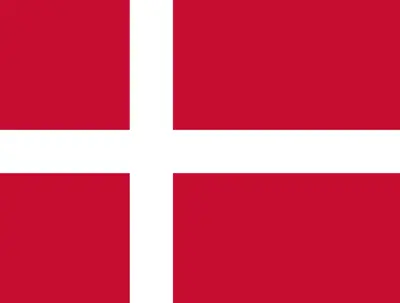
Denmark, officially the Kingdom of Denmark, is a Nordic country and the southernmost of the Scandinavian nations. Denmark lies southwest of Sweden and south of Norway, and is bordered to the south by Germany. The Kingdom of Denmark also comprises two autonomous constituent countries in the North Atlantic Ocean: the Faroe Islands and Greenland. Denmark proper consists of a peninsula, Jutland, and an archipelago of 443 named islands, with the largest being Zealand, Funen and the North Jutlandic Island. The islands are characterised by flat, arable land and sandy coasts, low elevation and a temperate climate. Denmark has a total area of 42,924 km2 (16,573 sq mi), land area of 42,394 km2 (16,368 sq mi), and the total area including Greenland and the Faroe Islands is 2,210,579 km2 (853,509 sq mi), and a population of 5.8 million (as of 2018).
