Charles Evans Hughes Quotes
The liberty of the press is not confined to newspapers and periodicals. It necessarily embraces pamphlets and leaflets. ... the press in its historic connotation comprehends every sort of publication which affords a vehicle of information and opinion.
This is one of the Supreme Court opinions that was written so broadly that it clearly covered the Internet Blogs, Social Media, and other forms.
Charles Evans Hughes, 1862-1948, Chief Justice, U. S. Supreme Court, U. S. Secretary of State, Governor of New York (Republican), Republican Presidential Candidate, Lovell v. City of Griffin, 1938
Sourced by: Eigen's Political and Historical Quotations


Two decades later Jefferson, after his Presidency, had developed a different attitude towards the press. See {585116}.


The evils of the time were even worse than in modern times. Most newspapers, journals, and periodicals were in 1835 actually owned and operated by political parties or people totally identified with political parties. In modern times, there are publications and blogs which are controlled by political forces, but most are not.


This was a decade before the Constitutional Convention in Philadelphia. You can imagine the distress of Vermonters when the U. S. Constitution was written with no provision for absolute freedom of speech which they had had for a over a decade. They would not ratify the U, S, Constitution without the understanding that there would be a Bill of Rights added with the First Amendment.

Arguing against explicit guarantees of press freedom in the Constitution Hamilton felt that the freedom could be maintained by public opinion and the good will of government:


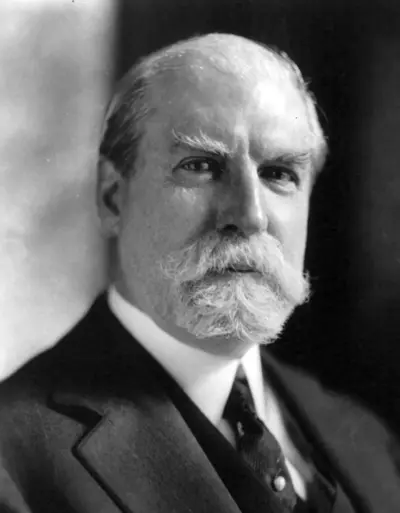
Charles Evans Hughes Sr. was an American statesman and politician who served as the 11th Chief Justice of the United States from 1930 to 1941. A member of the Republican Party, he was also the 36th Governor of New York, the Republican nominee in the 1916 presidential election, and the 44th United States Secretary of State.
