Sigmund Freud Quotes
The liberty of the individual is no gift of civilization. It was greatest before there was any civilization.
Freud, Sigmund. Civilization and Its Discontents. The Standard Edition of the Complete Psychological Works of Sigmund Freud, Volume XXI (1927-1931), edited by James Strachey, Hogarth Press, 1961, p. 95.


This quotation has been used by gay rights advocates. Opponents argue that a gay lifestyle is not “innocent” in that it is Biblically prohibited. This brings the issue of separation of church and state into the argument.


Most politicians and philosophers would argue that liberty is both an individual right and a group right. However there are money who do not recognize group rights and feel that they are inimical to individual rights.


Those who support the right of the individual woman to use contraception or have an abortion cite this quotation to illustrate this early statement of the right of a person to have control over his or her own body.


Spinoza was one of the most feared intellectuals in human history—feared that is by the established power structures. He is the only known person who was excommunicated by the Catholics, the Jews and the Muslims—all were forbidden to read his works. He was the enemy of authority and advocated personal reason as the guide for men.


Hayward claimed that Wilson was the first American President who ever criticized the American Constitution. Many do not agree as Madison and Jefferson in part, along with most other Americans, found the Constitution so wanting that it was ratified only on condition of the passage of the Bill of Rights. Jackson, was distressed by the limitations on the President and many others had their objections, but Wilson, before he became a politician was a prominent academic political scientist and wrote voluminously and had an intellectual following so his criticism was not considered so “political” as others.


Jefferson’s original was: We hold these truths to be sacred and undeniable that all …

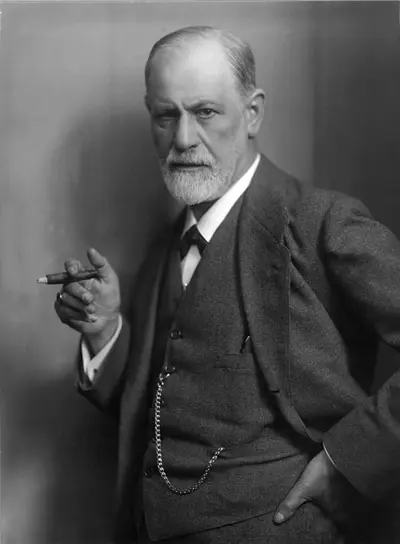
Sigmund Freud was an Austrian neurologist and the founder of psychoanalysis, a clinical method for treating psychopathology through dialogue between a patient and a psychoanalyst.
