Algernon Sidney Quotes
The common Notions of Liberty are not from School Divines, but from Nature.
Sidney, Algernon. Discourses Concerning Government. Printed by J. Darby, 1698, ch. 1, sec. 2.


Most politicians and philosophers would argue that liberty is both an individual right and a group right. However there are money who do not recognize group rights and feel that they are inimical to individual rights.


Those who support the right of the individual woman to use contraception or have an abortion cite this quotation to illustrate this early statement of the right of a person to have control over his or her own body.
This quotation has been used by gay rights advocates. Opponents argue that a gay lifestyle is not “innocent” in that it is Biblically prohibited. This brings the issue of separation of church and state into the argument.


This quotation is probably the beginning of the false charge that liberalism always rejects God and divine law. Most liberals, since the term has been used, have been religious and even those who were not did not see liberalism as necessarily antithetical towards religion. However, most doctrines of liberality had toleration and religious freedom as part of its foundation. To authoritarian religious leaders who did not believe in toleration (see {609037}) the very toleration of dissenters is tantamount to dissent. Today, for example, many liberals tolerate atheists and non Christian religions even though most are Christians themselves. To some narrow conservatives, this principle of toleration is therefore equivalent to being against religion. To others, modern liberal belief of separation of church and state is seen as anti religious.

Spinoza was one of the most feared intellectuals in human history—feared that is by the established power structures. He is the only known person who was excommunicated by the Catholics, the Jews and the Muslims—all were forbidden to read his works. He was the enemy of authority and advocated personal reason as the guide for men.
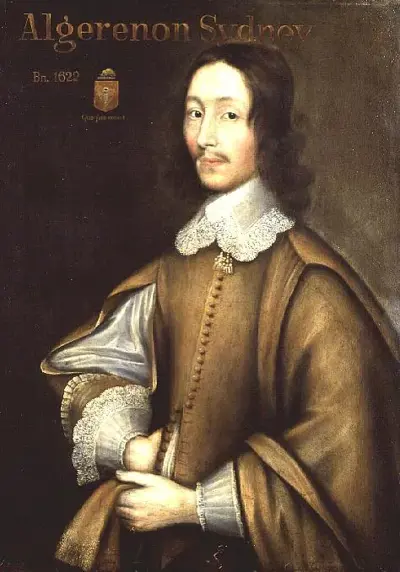
Algernon Sidney or Sydney was an English politician and member of the middle part of the Long Parliament. A republican political theorist, colonel, and commissioner of the trial of King Charles I of England, he opposed the king's execution. Sidney was later charged with plotting against Charles II, in part based on his most famous work, Discourses Concerning Government, which was used by the prosecution as a witness at his trial. He was executed for treason. After his death, Sidney was revered as a "Whig patriot–hero and martyr".
