Alvin Robert Cornelius Quotes
The law supports the indigenous disciplines operating in our society, through the authority of the elders …. It must be recognized that crime is a biological fact of society, whether ancient or modern, It grows out of social condition and is not to been contained without the most careful examination of its etiology… In that process, it would be well not to reject, out of hand as being out-dated, the principles and techniques laid down and applied by the ancients, for dealing with the problem in their times. They may have their uses, and certainly in eastern countries, they still possess validity.
The Justice was trying to justify the inclusion of Sharia as fundamental to the legal system of Pakistan. In addition he advocated allowing the unelected, uneducated, village elders to judge crimes and dispense punishment. This has led to horrendous abuses including a case where a young woman was sentenced to be gang raped because her brother had been seen alone with the daughter of a local wealthy, powerful village man who felt that his family had been dishonored and the only “justice” was to dishonor the family of the brother. There are thousands of cases each year where a system of justice and law of over 1000 years ago is allowed to be used in a modern nation and even worse, ancient tribal customs of revenge are allowed to control legal decisions without any judges or elected officials being involved in the matter.
Alvin Robert Cornelius, 1903-1991, Chief Justice of the Pakistan Supreme Court, Speech, Crime and Punishment of Crime, Sydney, Australia, August 1965
Sourced by: Eigen's Political and Historical Quotations


Article 17 of the Egyptian criminal code allows judges to reduce or even suspend sentences after a conviction. That has been used to effectively exonerate murders where “honor killing”—the killing of a woman or man whose alleged behavior was contradictory to existing mores, thus bringing dishonor upon the family. Women who were suspected of adultery or even dressing immodestly were murdered by husbands, brothers or fathers without any serious criminal punishment. Some have called for repeal of Article 17.


This unfortunate concept is in the literal Biblical history of Judaism and Christianity as well as Islam.

It is a common misconception that anarchists would not have any societal mechanism for preventing and combatting crime. Anarchists believe in the long run that with anarchism the reasons and motivations for crime will disappear, but until then they generally have been willing to use force to protect against force being used against the citizens. To critics, this seems to be government, and a government which uses force. Anarchists have never well detailed how they would manage such a seemingly conflicting situation.

Our legal system tries to take the personal vengeance out of the law enforcement equation unlike for example Saudi Arabia where relatives get to personally behead the convicted murderer of one of their family. Rosenbaum and a few others claim that our system I not emotionjally and naturally satisfying.
The right of vengeance was written into the first book of law for the Muslims. It was a very strong part of the culture long before Muhammad, amongst all the tribes. Before there were organized law enforcement agencies, family and tribal vengeance was the basic mechanism of law enforcement. Unfortunately for many cultures and people, it still is a legitimate method of law enforcement—even in many of the modern industrial democracies.

Islam was not very strong at this point and the followers of Muhammad were relatively few and Medina area contained Arab Non-Believers, Jews as well as the new Muslims. Muhammad drew up this document and got the non Muslims to agree to it. What is fascinating is that they bought into the idea that Muhammad would be the judge and final arbitrator of all disputes that were not resolved locally. The non Muslims agreed to this because Muhammad had been judging disputes for several years for those who would submit their cases to them. In a time of inconsistency, corruption, capriciousness and arbitrariness, Muhammad had developed a remarkable reputation for fairness, consistency, objectivity, and complete honesty. He could not be bought as most judges were at the time. He simply had demonstrated that he was the best man for the job.


Brigham's remark was made in 1853—the Saints were in the midst of a serious struggle for subsistence in the Salt Lake Valley. Famine was a serious threat in these years and those who thieved from their neighbors under such conditions put others' well-being and even lives at risk. The frontier was known for lawless behavior among some, far from military or police power. Under these conditions, thievery could well result in the suffering and death of victims and others in their communities—hence Young’s determination to stamp it out.

This is the basis for the practice of Saudi Arabia and a few other nations which are so decried by most nations and religions or the world. Modern Muslims and Muslim nations do not follow this Koranic prescription any more than Christians and Jews follow the Mosaic Law of the Bible regarding punishment that we would today regard as cruel and which has become very unusual.


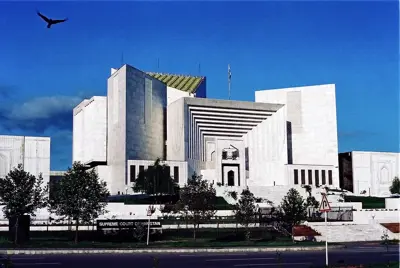
Chief Justice Alvin Robert Cornelius, HPk, was a Pakistani jurist, legal philosopher and judge, serving as the 4th Chief Justice of Pakistan from 1960 until 1968. In addition, he served as Law Minister in the cabinet of Yahya Khan, 1969 – 16 December 1971.
