George Bernard Shaw Quotes
The law is equal before all of us; but we are not all equal before the law
George Bernard Shaw, 1856-1950, Irish Nobel Laureate in Literature, Preface to The Millionairess, 1936
Sourced by: Eigen's Political and Historical Quotations


See Quotation 346648 for his conclusion of this predicate.


He was trying to calm many Americans who were upset that a young Black man who was accused of a minor misdemeanor of selling loose cigarettes (not whole packs) was being arrested by 5 white New York City police officers who thought that he was not cooperating forced him to the ground with one using a “choke hold” that was against Police Department regulations. The video, taken by a citizen, showed the arrested man crying to the police several times that he could not breathe when the pressure was placed by the officer with the choke hold. He man was choked to death. The coroner declared the death a homicide. However, the Staten Island district attorney presented the case to the Grand Jury in such a way that the jury found no reason to indict any of the police officers for any crime. Staten Island is a borough of New York far smaller and more suburban than the rest of New York System and more than half of all the white New York City police officers lived in the only conservative borough of New York where they were a major political force in the election of the borough district attorney. The President told the public that the Justice Department would investigate the case to determine if the victim’s civil rights had been violated.


One of the earliest codes of equality before the law for both rich and poor.

The power structure of England and the English administrators of South Africa were strong advocates of racial equality at the beginning of the 19th century. They insisted on equal administration of law. However the Boer white population could think of nothing more absurd. In a sense the Boers were much like the Southern Whites at the same time. The South African government however could not enforce its equality policies in the rural area – the majority of South Africa at the time. When democracy and self rule came to South Africa, the racially moderating force of the English was minimized and the majority of South Africans wanted a racially segregated society. Apartheid resulted.


The Senator was arguing against a bill to correct an aspect of the immigration law where infants and very young clildren are broght to the United States by parents who entered illegally. The children grow up in the United States—the only country and home that they have ever known. American law required that they be deported to “their countries” which they have no memory of and many do not even speak the language or know the culture. Sessions, is an example of the view that law defines justice. Therefore laws cannot be unjust nor can enforcing the law. Opponents point out that even in the United States we have, in earlier times, “enforced the law” which we came to regret and see as an injustice. The Fugitive slave laws, the Southern racial discrimination laws, and the law allowing Japanese American Citizens to be interned and lose their land during WWII are a few examples of laws, the enforcement of which is seen by most Americans as having been unjust. The execution of “witches” in early America was in conformity with the law.

60 years later George Orwell would use the last line in his famous Animal Farm --- See {625338} .
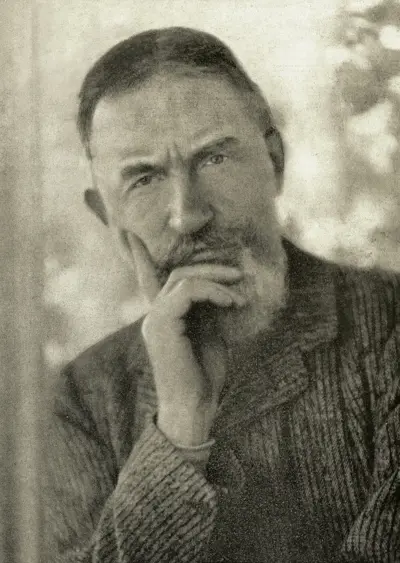
George Bernard Shaw, known at his insistence simply as Bernard Shaw, was an Irish playwright, critic, polemicist and political activist. His influence on Western theatre, culture and politics extended from the 1880s to his death and beyond. He wrote more than sixty plays, including major works such as Man and Superman (1902), Pygmalion (1912) and Saint Joan (1923). With a range incorporating both contemporary satire and historical allegory, Shaw became the leading dramatist of his generation, and in 1925 was awarded the Nobel Prize in Literature.
