Tim Buck Quotes
The key to the defeat and eventually the end of imperialism as a a whole is the unity of all socialist countries and progressive forces in capitalist countries.
Buck, Tim. Lenin and Canada: His Influence on Canadian Political Life. Progress Books, 1970.


In 1967 Carmichael left SNCC and joined the more militant Black Panther movement adn organization. But two years later, he became disillusioned with them and emigrated to Guinea in West Africa to promote African Unity and socialism. He was not very successful in in achieving either of these objectives in Africa.


Vladimir Lenin. This is a very important historical quotations. It was made by Lenin soon after the 1917 Russian Revolution and surprisingly to most he declared that the exporting of the Communist Revolution was more important than the national interest of communist Russia. Many Western nations, including the U. S. sent troops to part of Russia on various pretexts and it appeared to many that the West was ganging up against Russian Communism and interfering with their internal affairs. However, in effect, the new Russian state, with the attitude expressed by this quotation, was declaring a type of revolutionary war on all the capitalist nations who saw this fledgling mess of a country as a potential threat. They were right.


By the beginning of the 21st century, while socialism had been generally rejected as an overall philosophy by most nations, many socialist ideas were adopted and became normative of industrial democracies. This is but one example.

This became known as the Brezhnev Doctrine.


Cuba was not Communist under Castro in the Russian style of Communism. However, Castro operated Cuba with many of the key Marxist & Leninist Communist Principles {636672} (some of which the Russians were hypocritical about). Cuba was very much a Marxist, Socialistic State with few of the democratic reforms that characterized European Socialism. Until the collapse of the Soviet Union, Russian Communist aid propped up the Cuban economy, and that was another motivation for Castro not to criticize Russian Communism so he often appeared to be in agreement with Russian Communism even when he wasn't.

This is an example of what made the Cold War so difficult. The Italian Communists had great misgivings about the Russian version of Communism that tended to abuse human rights and try and control other countries. However, when the Russian Communists were under world attacks by the West, as with their incursion into Hungary, he urged that all the Communists stick together and defend the Russians even for policies that they thought wrong. On the West side, the same thing occurred. The United States tolerated and supported a number of terribly oppressive dictatorships that were virulently anti-Communist. Polarization was the international norm.

He wrote this anonymously as calling for a boycott of English manufactured clothing might have gotten him into much difficulty.

After the 1917 Russian Revolution many of the Western Countries sent troops to Russia where they aided the Whites against the Reds. When the Red Bolsheviks prevailed, there were many attempts to diplomatically and economically undermine the Communist government. This caused a unity among different Russian factions. Sforza urged leaving them alone and letting the Bolsheviks fail by their own ideology. Most Western nations and the United States did not agree with him.


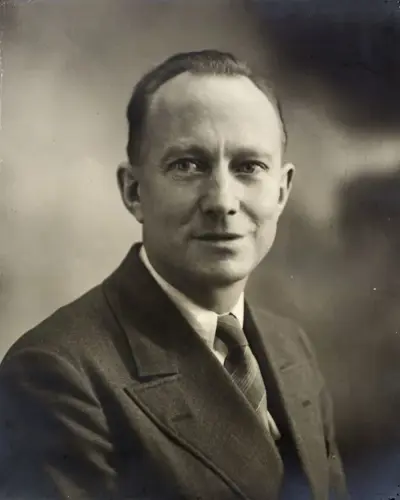
Timothy Buck was a long-time general secretary of the Communist Party of Canada (known from the 1940s until the late 1950s as the Labor-Progressive Party) from 1929 until 1962. Together with Ernst Thälmann of Germany, Maurice Thorez of France, Palmiro Togliatti of Italy, Earl Browder of the United States, and Harry Pollitt of Britain, Buck was one of the top leaders of the Joseph Stalin-era Communist International.
