Ted Stevens Quotes
[The Internet] is a series of tubes. And if you don't understand, those tubes can be filled and if they are filled, when you put your message in, it gets in line and it's going to be delayed by anyone that puts into that tube enormous amounts of material, enormous amounts of material.
United States, Congress, Senate, Committee on Commerce, Science, and Transportation. Executive Session to Consider S. 2686, the Communications, Consumer's Choice, and Broadband Deployment Act of 2006. Government Printing Office, 28 June 2006.

This is a classic attempt to argue against a technical proposed policy that the Senator did not understand. While most of the new digital companies favored net neutrality, the telephone companies opposed it as they wanted to be able to discriminate among customers in providing Internet access. One of the telephone companies had obtained Steven’s support for the anti Net Neutrality position. They must have explained some technical reasons to him, and this speech was his understanding of the concept. To those who know something technical about the Internet and digital transmission, this is so crude and wrong that it is humorous.


A startlingly bad prediction by a Nobel-prize winning economist particularly given it was stated in 1998 rather than a much earlier date when the potential of the Internet wasn’t already apparent. Ironically, the quote is from a Red Herring article he wrote titled “Why Most Economists’ Predictions Are Wrong” in which he asserts that most economists predictions are wrong because they overestimate the impact of future technologies. This quote is part of a longer, equally incorrect quote: “The growth of the Internet will slow drastically, as the flaw in ‘Metcalfe’s law' becomes apparent: most people have nothing to say to each other! By 2005, it will become clear that the Internet’s impact on the economy has been no greater than the fax machine’s.” See related quotes.


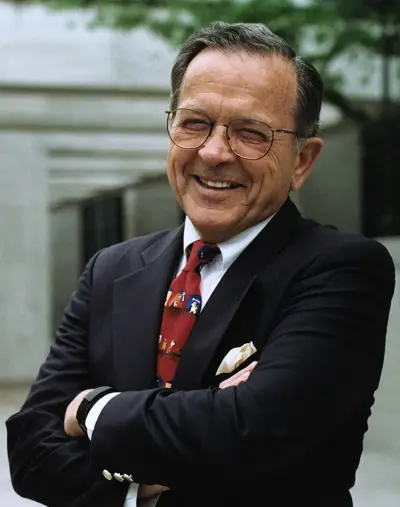
Theodore Fulton Stevens Sr. was an American politician who served as a United States Senator from Alaska from 1968 to 2009. He was the longest-serving Republican U.S. Senator in history at the time he left office; his record was surpassed in January 2017 by Orrin Hatch from Utah. He was the president pro tempore of the United States Senate in the 108th and 109th Congresses from January 3, 2003, to January 3, 2007, and was the third U.S. Senator to hold the title of president pro tempore emeritus.
