George Cornwall Lewis Quotes
The insecurity of property in Ireland, whether real or supposed … prevents the English or Scotch capitalist from transmitting materials to be manufactured in Ireland.
George Cornwall Lewis, *, British Economist, 1836
Sourced by: Eigen's Political and Historical Quotations


The word “proprietor” at the time meant someone who had title to land. The title was then almost always tied up with the aristocratic titles. “Great proprietors” were therefore nobles who owned and controlled large land holdings. The “improvers” tended to be the businessmen—especially the manufacturers and the transportation magnates. Large landowners could just make money by renting parts of their land to tenant farmers. They needed no capital, no vision, not much skill or talent, and they didn’t have to take any risks.


Day was often associated with left wing causes, but she was very hard to classify in traditional political terms. This quotation shows that unlike most communists and many socialists, she was an advocate of private property although she fought for the ability of a larger proportion of the population to have property.

This quotation illustrates a very interesting historical fact about white understanding of Native American concepts of property and ownership. Here is a Scottsman before the American Revolution who is writing about American Indians and their communal concept of property. The “purchases” of Indian land from individual Indians therefore has even more doubt cast on the propriety than if the whites were acting in good faith. Furguson had personally visited North America for a brief visit.


During the revolution against apartheid, a number of communist organizations allied themselves with the ANC against the White minority regime. A few of the communist leaders rose and became officials of the ANC. The vast majority of the ANC supported private enterprise with the kind of socialist aspects that were then typical of the Scandinavian countries, Germany and even France. Mandela, before the successful ousting of the Apartheid held a number of communist ideas and principles as the “capitalists” were making money from the apartheid system and there would support the status quo, However, he had a change of heart and mind regarding private enterprise after the successful effort to end white minority rule. He was good to his word, and even after he retired, the ANC and the government maintained pro private enterprise policies.


This is a classic illustration of a quotation illustrating the problem that political discussions have with the issue of causality. Conrad is absolutely correct in stating that investment and innovation as the direct cause for most productivity. However, without the demand created by consumption (or the prospect of it) there will be little capital and effort at innovation. There is a causal chain and different ideological proponents argue for their preferred link in the chain tending to ignore the other links. Many liberals tout increasing consumption and pay little attention to the investment and innovation—an error of the opposite of Conrad’s.


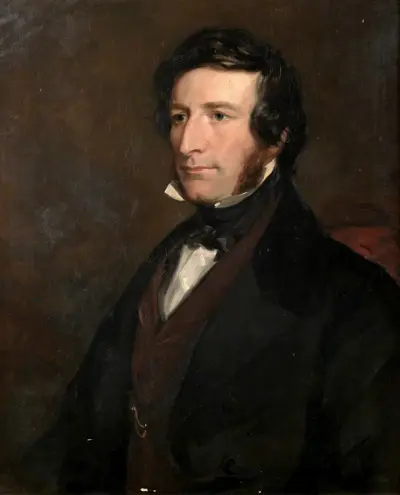
Sir George Cornewall Lewis, 2nd Baronet, PC was a British statesman and man of letters. He is best known for preserving neutrality in 1862 when the British cabinet debated intervention in the American Civil War.
