Tip O'Neill Quotes
The House Republicans are not the enemy, they’re the opposition. The Senate is the enemy.
Thomas Phillip O’Neill Jr., 1912-1994, [Tip O’Neill], U.S. Representative (Democrat, MA), Speaker of the House, Correction to a new staff member who referred the Republican house members trying to block the Speaker’s rules as “the enemy”.
Sourced by: Eigen's Political and Historical Quotations


Most American politicians and citizens, unlike DeLay, believe that arguing against the opponents’ political philosophy should be done with debate, civil argument, advocacy, speechmaking and writing and not by attacking opponents and confronting them whenever possible. Later, DeLay was convicted and sentenced to jail for money laundering and illegally spending and raising campaign funds. He was also reprimanded by the House Ethics Committee for unethical methods of fund raising for other earlier actions.


At the time, the Republicans held the House of Representatives, but not the Senate or the Presidency. By popular vote, even the House elections had the majority voting for the Democrats, but the gerrymandering gave the Republicans more seats. A minority of the minority Republicans were Tea Party Republicans—ultra conservatives who would not compromise but who intimidated other Republicans by threatening to run candidates against them in primary elections. The result was that the Tea Party Republicans—a minority of the minority could block almost any legislation and did. That Congress passed less legislation than any in American history including the “Do Nothing Congress” of the Truman era.


His main reason for believing this is that all appropriations bills must be initiated by the House of Representatives. Lobbyists therefore often give the House more attention than the Senate.


Morris had it wrong. He perceived that the Senate could not be a check on the House or the President because to him, the Senate was the house of aristocrats and America really did not have aristocrats since there was no nobility so that there would be no difference between Representatives and Senators-–they both were drawn from the same egalitarian population. He missed however that the Senate, being elected by states, would represent a broader constituency than a member of the House, and because of this broader perspective, would come to see issues in nationalist and state terms while Representatives would perceive the same issues in local terms. Hence the two houses of Congress became effective checks on each other, and the Senate on the President because not of different social or economic class, but of broader and narrower perspectives. It was not what Senators were but what they would become once they were elected and had to be reelected.


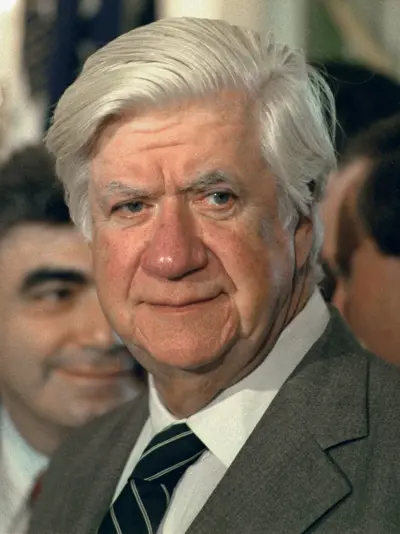
Thomas Phillip "Tip" O'Neill Jr. was an American politician who served as the 47th Speaker of the United States House of Representatives from 1977 to 1987, representing northern Boston, Massachusetts, as a Democrat from 1953 to 1987. The only Speaker to serve for five complete consecutive Congresses, he is the third longest-serving Speaker in American history after Sam Rayburn and Henry Clay in terms of total tenure and longest-serving in terms of continuous tenure (Rayburn and Clay served multiple terms in the Speakership).
