Thomas Reid Quotes
The gentleman’s time has expired, and I now have the floor, and I want to say that it is an improvement to the floor.
Thomas Reid, 1839-1902, U. S. Congressman (Republican, ME), Speaker of the House, Polite insult of a Congressman during a House debate, Quoted in The Washington Post, July 24, 2011
Sourced by: Eigen's Political and Historical Quotations


This quotation had no memorable significance at the time it was made, but has historical meaning for us as a result of the comity contrast of the Congressmen then when compared with the viciousness and hyperpartisanship of the Congresses of the early 21st century.


This practice is still followed.


Some scholars credit this quote earlier to Comedian Will Rogers.

The Chairmen of the Committees then had tremendous, almost unilateral power. The chairman reached seniority by being elected over and over and had little opposition. At the time they were almost all older Democratic Congressmen from the "Solid South", very conservative and still racists despite the 1964 Civil Rights Act. They were outraged when a Freshmen member of Congress who rarely made a public statement, took on the most powerful members of the House and wanted to reform the Seniority. But Ms. Chisholm was a teacher in her professional life, and by challenging the seniority system and attracting the enmity of most of the Chairmen, the media and the public started to cover the dispute and Chisholm explained to America exactly how the system worked and how undemocratic and racist it was. Her effort put the Seniority System on the public agenda, and reforms evolved over the next decades." She was the first Black woman to be elected to Congress and was the first Black woman to actively campaign for the Presidency


The House, under the control of the majority leadership, does not have to be very efficient or reasonable with respect to its own procedures. Leaderships of both parties care little of their caucus members read the legislation or not so long as they vote the party line as instructed by the leadership.


At the time, most members never read the bills they voted on, though some tended to read earlier versions. The bills were very long—sometimes as long as 2000 pages. Usually a few members of Congress worked with Congressional Staffs and lobbyists to finalize bills. It was believed that the lobbyists were the only people who read the entire bills in all their versions.
That particular Congress was the worst in American history in terms of passing legislation. Mainly there was philosophical gridlock between conservatives and liberals and worse between Tea Party Conservatives and mainstream conservatives. The Iraqi legislature was gridlocked religiously between Sunni and Shiite Muslims.

The House Rules Committee had evolved into a very powerful committee which controlled the debate rules of every piece of legislation that came before the House. This Congress—the worst in American History—passed fewer bills than any other. Those that ever got out of the Rules Committee had Rules that prohibited the minority from even offering amendments.

That 113th Congress was the most unproductive in history. It was so bad, that even the Senate Chaplain prayed for a change.

His admonition did little good. That Congress passed fewer bills than any other in history.


The 2014 House of Representatives was probably the worst in American History. The Republican Speaker of the House did not have any control over the Tea Party wing of his caucus, but they controlled him in most instances. Even when he made bargains with the President and the Democrats, he could not get his caucus to go along. Almost no legislation was passed and the few bills that were passed were symbolic, were never considered by the Senate and the President did not even have to exercise his power of veto during that Congress.

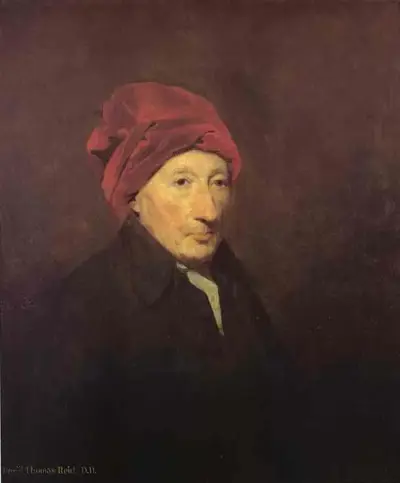
Thomas Reid FRSE was a religiously trained Scottish philosopher. He was the founder of the Scottish School of Common Sense and played an integral role in the Scottish Enlightenment. In 1783 he was a joint founder of the Royal Society of Edinburgh. A contemporary of David Hume, Reid was also "Hume's earliest and fiercest critic".
