Heinrich Heine Quotes
The fundamental evil of the world arose from the fact that the good Lord has not created money enough.


Samuel Langhorne Clemens, 1835-1910. He was instrumental in being one of the major writers who made the American public aware of the fact that the very wealthy sometimes systematically committed crimes involving money and in much larger crimes than the poor criminals.


For almost a century this is an attack that conservative Republicans had made on Democrats. Yet the two greatest period of poverty, the Great Depression and the Great Recession occurred in Republican Administrations and recovery began under Democratic Presidents. The two great targets accused of wanting to spread the wealth around were Presidents Clinton and Obama In each case, the country was more affluent after 4 years of spreading the wealth, there were more jobs and average incomes were up—well better than when they took office from Republicans. There are two great theories of how wealth and prosperity is created. Conservatives argue that government should give money (or reduce tax burdens) and resources to the wealthy and they will invest it to create jobs and everyone will prosper. Liberals argue that the government should invest (spend money) in programs that strengthen the middle class and give them money or (reduce their tax burdens) and consumer spending which accounts for 70 percent of the economy will increase and the rich owners of the corporations will also make more money. Clearly both of these approaches seem to have worked at different times in American history; however, both of them have been failures at other times. (The George W. Bush and Jimmy Carter Administrations for example.) However, that is the political economic issue which must be decided by each American generation.


This problem of capitalism needs solving, but has existed as long as capitalism has.


Many of the richest people continue to acquire more money via illegal and immoral means. See {630537}.


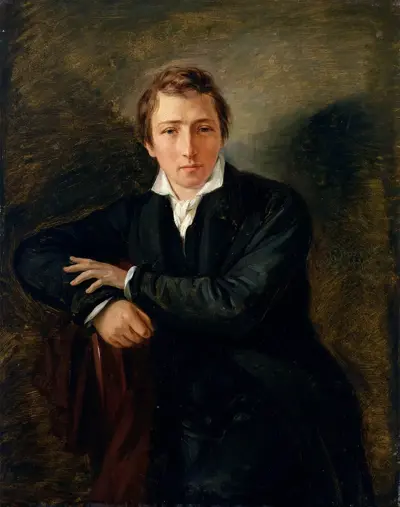
Christian Johann Heinrich Heine was a German poet, writer and literary critic. He is best known outside Germany for his early lyric poetry, which was set to music in the form of lieder (art songs) by composers such as Robert Schumann and Franz Schubert. Heine's later verse and prose are distinguished by their satirical wit and irony. He is considered part of the Young Germany movement. His radical political views led to many of his works being banned by German authorities—which, however, only added to his fame. He spent the last 25 years of his life as an expatriate in Paris.
