L. Ron Hubbard Quotes
The following is a list of Communist Party members or suspects in our organization …. The operation of preparing and signing the [loyalty] oaths and fingerprinting all employees is now being undertaken and the results will be forwarded to the FBI …. The foundation has taken a highly punitive stand on Communism. I shall shortly be in Washington to go over this matter with the government.
He lists a number of employees including his own wife. The foundation was the L. Ron Hubbard Dianetic Research Foundation Inc. In this case a religious leader was asking the government for assistance in determining who was and was not fit to be a member and an associate of his organization. The FBI apparently ignored his accusations, and there was no government action though he continued to accuse associates throughout his life. The FBI agent who met with Hubbard to investigate his charges wrote “mental case” on the file.
L. Ron Hubbard, 1911-1986, Founder of Scientology, Novelist, Letter to the FBI, March 3, 1951
Sourced by: Eigen's Political and Historical Quotations

This quotation illustrates one end of the range of union leadership regarding communism. Some union leader were communists; some were pro Marxist but against the Russian style of dictatorial communism. Others did not care for Communism at all but saw the communists as an effective tool that really frightened American corporate management and politicians so they looked reasonable by comparison and they therefore wanted the communists around. Last were those like Reuther who was aggressively anti-communist and wanted labor to expel them whenever they turn up. However, what is ironic is that Reuther himself was labeled a Communist by many right wingers who also used Reuther’s “duck” test. Reuther wanted a national health insurance system; so did the Communists. He advocated and end to segregation; so did the Communists. He fought for workers having a say in management, a classic communist demand, and many other similarities.

This quotation was obtained via an FBI wiretap on Dr. King’s telephone. What makes it historically important is that J. Edgar Hoover’s FBI steadfastly maintained that King and his movement were philosophically communist in their reports to the President and others. For example, a CIA memo of the time reported that “According to the FBI, Dr. King is regarded in Communist circles as a genuine Marxist-Leninist who is following the Marxist-Leninist Line.” However, Hoover had this and other evidence of King’s antipathy to communism but suppressed this leading the administration and others to believe that the Civil Rights Movement, to which Hoover was unalterably opposed, was Communist influenced. See {603873}, {603891}, {603872}, and {603889} showing Hoover’s view of King and Blacks.


Seeger’s admission was typical of tens of thousands of Americans who had become disillusioned with the fairness, equity, and effectiveness of capitalism during the depression. They were easy prey for Communist propaganda which pointed out all the problems in American society from legal racial discrimination to lack of a social safety net while at the same time lying about the Russian achievements and hiding the horrible abuses of human rights—especially the political murders of millions of people. Then the truth about Russia emerged, Seeger and so many others abandoned the Communist Party as at the same time America was improving its society and beginning to try and deal with the great problem that had plagued America from its inception—racism and slavery.


So often in America, citizens and government officials have made alliances or joined organizations under the theory that “the enemy of my enemy must be my friend.” It has almost always been a mistake ranging from joining the Communist Party in the 1930s to supporting the dictators or the Middle East, Asia, and South America. In the 1930s Fascism was growing and already on the march and neither America nor England—the leading democracies were not doing anything to combat the threat. America was emerging from the Great Depression, had a string Isolationist movement, and a small but influential group of Fascists and Hitler enthusiasts. Also, no one outside of Russia knew about the Stalin atrocities.


Reacting to accusations that he was soft on communism:


Moody was an avid Protestant Evangilical. The reference to the "reign of terror" was not to the French Revolution per se but to a national calamity of the severity and magnidute of the French Revolution sd God's wrath would be triggered if more AMericans were not Evangelized. What is particualry interestting is by 1886 Communism had already developed a bad reputation in the part of many religious fundamentalists and considered a sin of the first order such as adultery. The red scare was alive and well. Ironically, Moody and most other anti-communism evengelicals were not hostile brecause of Karl Marx's economic or historical views and theories, but rather Marx's, Engels', and other early Communitists hostility to organized religion was the main casue. The economic adn political opponents of Communism enlisted the aid of as many religious people was possible by emphasing "Godless Communism" and the vast majority of Americans at the time, if they knew anything about Communism at all, it was that the communists were hostile and opposed to religion.


After this, no other member of the Executive branch went before McCarthy again
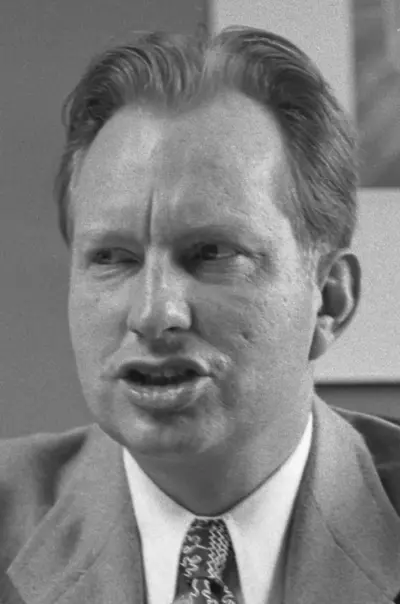
Lafayette Ronald Hubbard was an American author of science fiction and fantasy stories who founded the Church of Scientology. In 1950, Hubbard authored Dianetics: The Modern Science of Mental Health and established a series of organizations to promote Dianetics. In 1952, Hubbard lost the rights to Dianetics in bankruptcy proceedings, and he subsequently founded Scientology. Thereafter Hubbard oversaw the growth of the Church of Scientology into a worldwide organization.
