Boutros Boutros-Ghali Quotes
The fact that you had disruptions in the peace process was not only in Rwanda. We had the same problem in Cambodia, we had the same problem in Mozambique, we had the same problem in Salvador.
Boutros-Ghali, Boutros. Interview. Frontline: Ghosts of Rwanda, PBS, 1 Apr. 2004.


There are many who disagree with Stewart on two grounds. First, the failed state sill not use the aid reasonably and it will wind up in the pockets of war lords of terrorist groups. Second, the failed state often becomes a safe haven for terrorist groups to operate and train from.
The "trouble" was the terrorist attacks to gain an independent Pakistan that the Punjab Muslims were perpetrating against the Sikhs and the Hindus and the retaliations. At first organized in the cities they had become spontaneous and spread to the countryside. It turned out to be impossible for Governor Jenkins and the limited British troops and police to stop the violence in most places. By the end of the Partition of India hundreds of thousands of Punjabis had been killed.


His view, that America had no vested interest in Rwanda, was the prevailing thinking of the Republicans who controlled Congress and many of the Democrats as well. President Clinton considered intervention in Rwanda, but decided against it given all the opposition and little time to educate the American public to a different position. The result was the genocide in Rwanda where over 500,000 Tutsis were exterminated by the Hutus. Clinton, several years later not only admitted that he made a political and moral mistake, but officially apologized to Rwandan Tutsis who remained alive. He had intervened very successfully in Kosovo to prevent more murder of ethnic Muslims and was given a hard time politically by his opposition even though the brilliant effort cost no American lives. The United States and the UN, all bearing guilt for doing little in Rwanda, did help to set up the mechanism for the trials of the worst murderers and at least many of the most guilty were brought to justice.


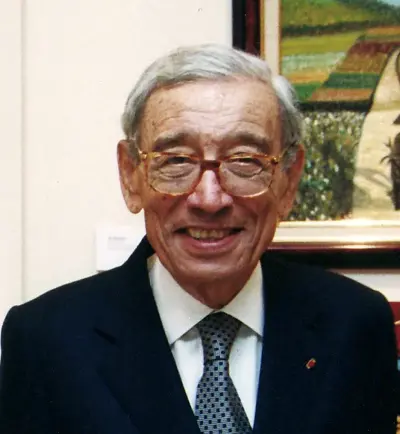
Boutros Boutros-Ghali was an Egyptian politician and diplomat who was the sixth Secretary-General of the United Nations (UN) from January 1992 to December 1996. An academic and former Vice Foreign Minister of Egypt, Boutros-Ghali oversaw the UN over a period coinciding with several world crises, including the breakup of Yugoslavia and the Rwandan genocide. He went on to serve as the first Secretary-General of the Organisation internationale de la Francophonie from 16 November 1997 to 31 December 2002.
