H. G. Wells Quotes
The ethical system of these men of the New Republic, the ethical system which will dominate the world state, will be shaped primarily to favour the procreation of what is fine and efficient and beautiful in humanity — beautiful and strong bodies, clear and powerful minds, and a growing body of knowledge — and to check the procreation of base and servile types, of fear-driven and cowardly souls, of all that is mean and ugly and bestial in the souls, bodies, or habits of men.
Wells, H. G. Anticipations. Chapman & Hall, 1901, p. 298.


This quote was the beginning of the now discredited Eugenics movement. The essential problems were twofold: One was that someone had to decide which characteristics were desirable and undesirable, and there is wide difference of opinion that there is no way of resolving. Genocide is the result of Eugenics taken to extremes. Second, it the issue of human rights. No person, organization, or government has the right to tell a particular individual what genetic characteristics he/she may have with his/her children. Note that the issue of Population Control for size was also a part of the early Eugenics movement but is a totally separate issue. It is the voluntary verses the compulsory nature of Population control the is the critical ethical element.

He was restating the argument of the Eugenics Movement but was a critic of many parts of it. This Movement, which grew quite popular for a while, tried to improve the race of man, not by improving individual people or even a generation of people, but of selective and restrictive breeding of humans. The coercion and bias associated with it caused one of the worst violations of human rights in American History, and then was picked up by Adolf Hitler who carried the ideas to one of the worst atrocities in human history.


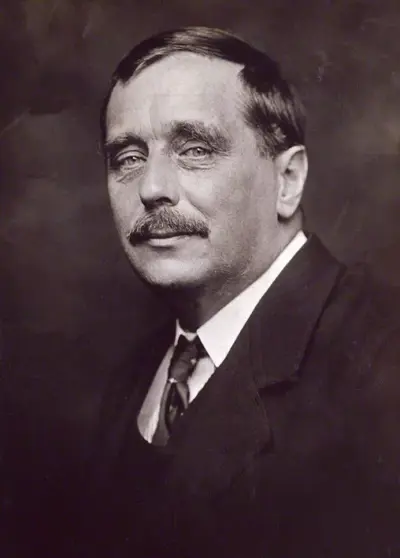
Herbert George Wells —known as H. G. Wells—was a prolific English writer in many genres, including the novel, history, politics, social commentary, and textbooks and rules for war games. Wells is now best remembered for his science fiction novels and is called a "father of science fiction", along with Jules Verne and Hugo Gernsback.[a] His most notable science fiction works include The Time Machine (1895), The Island of Doctor Moreau (1896), The Invisible Man (1897), and The War of the Worlds (1898). He was nominated for the Nobel Prize in Literature four times.
