James Larkin Quotes
The employers cannot carry on industry nor accumulate profits if they have not got the good will of the workers or their acquiescence in carrying on such industry.
Larkin, James. "A Plea for a Settlement." The Irish Worker, Oct. 1913. Cited in Larkin, Emmet. James Larkin: Irish Labour Leader, 1876-1947. Routledge & Kegan Paul, 1965, p. 129.


A wealthy nobleman, her father was accused of not being in touch with the common man.

At the time, the mine owners and operators claimed that they had NO obligations to their workers—not even to ensure a safe mine. There was no OSHA and workers died and were maimed on the job much more frequently than they do today. Many mine owners now accept that they have obligations to the workers, and the rest are required to have responsible and safe working conditions by law and OSHA regulations.


This quotation was reprinted and widely distributed by the CIO in its 1936 organizing drive of the Ford Motor Company


At the time, most company owners and managers refused to bargain collectively with employee elected organizations. Hoover was then an exceptionally modern business person who realized the importance of good working relations between management and labor and advocated collective bargaining. However, as he got deeper into partisan politics, he backed off urging this. Nationally, in the 1960s collective bargaining had become an instrument of basic sound management, but more and more managements returned to simply refusing to bargain with employee organizations and instead strengthened their managers and supervisors and adopted (by choice and by government regulation) more and more modern, healthy, safe, efficient and attractive working conditions and policies. By the 21st century, labor unions and employee organizations had lost their attractiveness while managers were more attentive to workers and there were very few private companies engaged in collective bargaining.


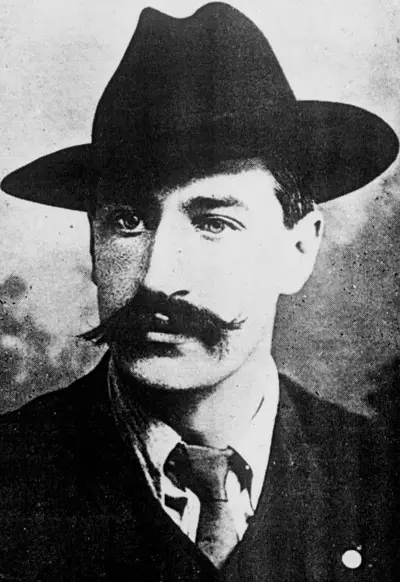
James Larkin, sometimes known as Jim Larkin, was an Irish republican, socialist and trade union leader. He was one of the founders of the Irish Labour Party along with James Connolly and William O'Brien, and later the founder of the Irish Worker League (a communist party which was recognised by the Comintern as the Irish section of the world communist movement), as well as the Irish Transport and General Workers' Union (ITGWU), the Workers' Union of Ireland (the two unions later merged to become SIPTU, Ireland's largest trade union). Along with Connolly and Jack White, he was also a founder of the Irish Citizen Army (ICA; a paramilitary group which was integral to both the Dublin lock-out and the Easter Rising). Larkin was a leading figure in the Syndicalist movement.
