Aly Khan Quotes
The emergence of Pakistan, a decade ago, was an act of protest against the existence of privilege in the social order of the subcontinent of India.
Khan, Aly. "Pakistan and the Muslim World." Vital Speeches of the Day, vol. 24, no. 17, 15 June 1958, pp. 535-537.

As early as 1933, 14 years before Indian independence, there was a movement for a separate Muslim nation within India. Ironically, Hindu India was never a nation in any sense of the word, but was a series of independent principalities much like Italy before its unification. However, with the Muslim conquest of the various Indian states, there was a central authority, ruler, and nation for the first time. Later the Muslims had to argue that India was not a country when it was they who had made it such. When the Muslim Emperors were in power, they argued that India was one country under their authority. But when they lost power, the Muslims argued the other side of the issue.

Singh turned him down. Note that even before Pakistan was a country, Jinnah and other Muslim leaders had hopes of grabbing much of India as the British partitioned it, and have been trying to do so ever since the inception of Pakistan


Churchill was reported to be so angry and exasperated that his face turned red and he was sputtering. During World War II, Gandhi, Nehru and other Indian Nationalists were leading protests against British control of India. This not only bogged down British soldiers surprising the nationalists rather than fighting in Burma or in other war theaters, but India supplied a huge number of battalions to the British Army the world over and if that manpower dried up, the allied war effort would suffer. The American State Department wanted Churchill to announce that after Japan was defeated, there would be a process toward self-government. This way, they thought, the Indians would redouble their effort to defeat the Japanese and stop the then current protests and strikes. Churchill was strongly opposed to any diminution of the British Empire, but beyond that, he knew India quite well and realized that at any hint of Independence the large Muslim minority in India would insist on autonomy or a partition of the country and use sectarian violence and terror to intimidate the Indian Congress party and the British, but the major victims of the terror—the Hindus and the Sikhs would not remain passive, but would retaliate in kind. President Roosevelt was in the midst of planning the Normandy Landings of the D-Day invasion and did not want to pressure Churchill and the British at this point in time, so the door to independence was not opened during the war and Britain had to deal with the protests throughout. However, when, after the war, the Labor Government, started a process toward Indian independence which resulted in exactly what Churchill predicted. At least 2 million Indians were slaughtered in the internecine terrorist cycles of fear and retaliation motivated terror attacks what were so extensive that the British military could not really control it.

At Indian Independence from Britain, people could choose whether they wanted to be citizens of India or the new Muslim state created because many Muslims insisted on living in a country that was majority Muslim. However, and what came as a great shock to the then new Pakistani leadership, the majority of the Muslims of India choose not to become citizens of the new Islamic state and preferred to stay in Hindu dominated India which they knew would be democratic, free, and would protect their right to practice Islam as they saw fit. Many feared that in Pakistan Islamic extremists would dictate the exact form of Islam that Muslims must follow, and that is exactly what happened in Pakistan—not only from government action proscribing religious practice but from the government tolerating and not interfering with Islamic fundamentalist extremist terrorists who often assassinated Muslims whose particular form of worship was offensive to them or people would call for reforms of the protection of human rights.


There were several difficulties in this definition even for those British and Indian Congress leaders who were willing to accede to an independent Muslim state. Two of the most important where the definition of areas. They could be so defined as to include majority Hindu or Sikh areas surrounded by larger majority Muslim areas—the classic problem of boundary districting and redistricting. This was an insurmountable problem in the Punjab and elsewhere. The 2nd was the undemocratic nature of the demand. The Muslim League, unlike the Congress Party, had never had a very large participation and its leaders were never elected over a series of free and fair elections. Many Muslims were opposed to the Muslim League and there were areas of India, like Kashmir, where a large proportion of the 70% Muslim population were opposed to partition and if there were to be one would prefer to remain with India. With virtually 100% of the Sikhs, Hindus, Buddhists and Christians of Kashmir refusing to be part of a Muslim state, the majority in Kashmir would have then voted to remain a part of India but the Muslim League did not take account of democratic processes at the time. They changed their view later after they had infiltrated tens of thousands of semi nomadic Muslim Tribesmen across the border to gain the majority. Then the Indians would not accede to a plebiscite until the newcomers were removed and India has been in a constant war with Pakistan who has been trying to gain control of Indian Kashmir by war and terrorism.
The Partition was accompanied by over 2 million murdered Indians as India was divided into a smaller India with almost all the Hindus and Sikhs and a slight majority of the Muslims and Pakistan with all Muslims who made that choice. Pakistan has been trying to de stabilize the area ever since to gain control of more land and became a theocracy and military dictatorship—sometimes de facto and sometimes de juro.

Arguments against the Partition of India at the time centered around the poor economic viability of a separate Muslim state. However Iqbal and others placed the cultural issues in the forefront. They eventually prevailed.


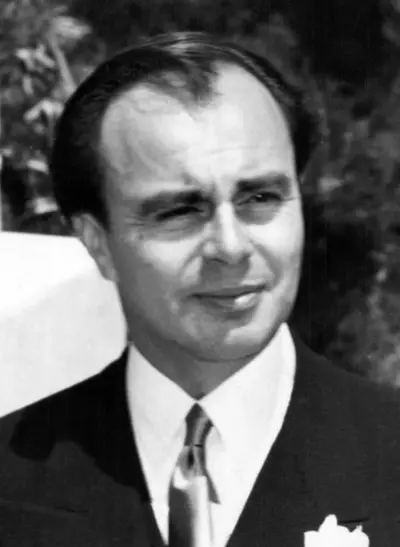
Prince Ali Salman Aga Khan, known as Aly Khan, was a son of Sultan Mahommed Shah, Aga Khan III, the leader of the Nizārī Ismaili Muslims, a sect of Shia Islam, the father of Aga Khan IV and a sayyid descendant of Muhammad through his cousin Ali, daughter Fatimah and grandson Husayn ibn Ali.
