Fidel Castro Quotes
The death of Abdel Nasser on September 28, 1970, was an irreversible setback for Egypt.
Castro, Fidel. "The Rebellion in Egypt." Cubadebate, 13 Feb. 2011.


This quotation not only has historical significance by showing that there was a female involvement in Pan-Arab politics in the 1920s, but has political significance today and it ironically is quoted more by Israeli Defenders than by the opposition to the existence of the Jewish state. Most modern Arab politicians find it not in their political interest to seem to approve of an independent woman having leadership in the Middle East. The Israeli defenders quote it to refute 3 arguments that many political enemies of Israel make: There were no significant number of Jews in Israel until after the Holocaust when the UN decided that they could have Arab land. The land in Israel was seized by the Zionists or ceded to them by the UN and Jews had no legitimate right to any land in the Palestinian area; and that there was no hostility to the Jews until they established a Jewish State in the area. The most damaging fact to the Arab extremist argument. There were so many Jews buying land that there was a movement to try and persuade Arabs not to sell land to Jews and to buy land from Jews.

Syria constantly goaded Nasser and Egypt to attack Israel. However, Nasser was receiving huge foreign aid in the form of wheat which was needed to feed his population. See {595373}


This illustrates one of the reasons that the Israeli Arab conflict has been unsolvable over the years. A thousand years ago, the Arabs were a leading intellectual and military power in the world. The rest of the world has moved ahead and they have actually retrogressed. So the Arabs seek dignity which is very elusive. They have never wanted to negotiate terms with Israel when they have been weak and feel defeated. So the pattern has been that they feel they cannot negotiate for justice as they are too week. So periodically they attack Israel which has always defeated them and hoped that after the Arab defeat, permanent negotiations for peace could take place. But the Arabs were feeling too weak. So they just repeated all their extreme demands. After a few years, they would try another attack, lose again and the cycle would repeat. The Israelis fear that if the Arabs every won a war, the Arab moderates might be willing to reasonably negotiate, the extremists would want to continue the fighting and “drive the Israelis into the sea” as they have so often threatened.


Treaties often end up with disputes of the parties over issues in the treaty. Good treaties have built in a method for resolving differences regarding the treaty. This clause is a good example.


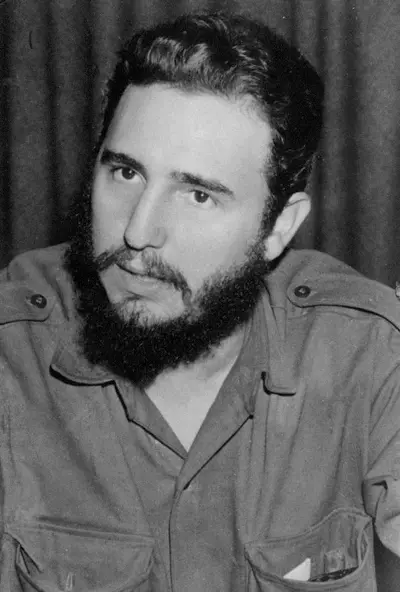
Fidel Alejandro Castro Ruz better known internationally as Fidel Castro, was a Cuban revolutionary and politician who served as Prime Minister of Cuba from 1959 to 1976 and President from 1976 to 2008. Ideologically a Marxist–Leninist and Cuban nationalist, he also served as the First Secretary of the Communist Party of Cuba from 1961 until 2011. Under his administration, Cuba became a one-party communist state; industry and business were nationalized, and state socialist reforms were implemented throughout society.
