Joseph E. Gary Quotes
The conviction proceeds upon the ground that they had generally by speech and print advised large classes to commit murder
Explanation of the men convicted for conspiracy to murder at the Haymarket Riot of May 3, 1886.
Joseph E. Gary, *, Judge
Sourced by: Eigen's Political and Historical Quotations


In September of 2005 a Danish Newspaper published some political cartoons showing the hypocrisy of some Muslims who use Islam to justify murder of innocents and terrorism. Months later, in January of 2006 many in the Middle East protested vehemently and Muslim riots broke out because the Prophet Muhammad's visage was depicted against Islamic tradition. Many Muslim nations started a boycott against Denmark. Many Muslim leaders claimed that insulting religion was an “abuse” of freedom of speech including those from nations which regularly publish material that is virulent against Christians and Jews. Islamic country newspapers however, when it comes to what is perceived as material insulting to Islam, as typified by this editorial, feel that their religion should never be insulted despite the fact that Saudi Arabian media constantly insult Christianity and Judaism. Their justification of this gross double standard is that Islam is the “true” religion.

In September of 2005 a Danish Newspaper published some political cartoons showing the hypocrisy of some Muslims who use Islam to justify murder of innocents and terrorism. Months later, many in the Middle East protested vehemently and Muslim riots broke out and Danish boycotts ensued because the Prophet Muhammad's visage was depicted against Islamic tradition. Many Muslim leaders claimed that insulting religion was an “abuse” of freedom of speech including those from nations which regularly publish material that is virulent against Christians and Jews. Although France had a large Muslim minority, reaction of French Muslims was much more mild than that of Middle Eastern Arabs where the governments either encouraged the rioters or refused to take action to deter them from sacking Danish property.

Usually Jefferson was the strongest voice for rights with no loopholes. However, he wanted to have a slander exception as this quote shows. However, the issue is what happens if a government official or an agency believed that it has been falsely slandered? If Jefferson’s proposal was accepted completely, the government and officials could sue someone who published negative information that they thought was false. Our supreme court has limited the exception to private parties who were NOT “public figures” unless the publisher knew the information was false and proceeded anyway for malicious reasons.
England and most other countries do not have such an exception and the press is very timid about criticizing the government or officials lest they make a mistake .
The word “printer” had a slightly different meaning then. In Jefferson’s time the printer was also the publisher, Benjamin Franklin was known as a printer but he not only published material but wrote much of it himself. This was typical. So Jefferson is concerned with the rights of the printer, the publisher and the writer.

Islamic modernists like Serageldin are many among the educated Muslims but their views are often drowned out by the violence and extremist statements of the fundamentalists. This quotation is similar to statements by American Supreme Court Justices but surprises us when coming from a Muslim. But there are many who are as much committed to freedom of speech as most Americans. Even in America, some politicians have tried to make incitement a crime. John Adams’ Alien & Sedition Acts and laws of WWi are examples. However, in no Islamic nation have reformers had incitement removed as a crime as of 2011.

The 1st Amendment is almost absolute in its protection of speech. However, ironically the Untied States has much less internecine conflict with minorities better off than the nations where hate speech is illegal and criminal.

Several years before the Battle of Bunker Hill, revolutionary activity had already broken out in the American colonies—See {634132} for an example. Parliament passed the Administration of Justice Act of 1774 which gave the British authorities much more “clout” in dealing with the “seditious” American activities. It protected English law enforcement officials from being tried in local Colonial courts for murder or assault or unnecessary force in putting down insurrections in the colonies. Washington and other patriots used this term to describe the Act. Their reason was that under the new law, a British Soldier could kill a colonist and would not be subject to arrest and trial in local colonial courts. So there was no check on the law enforcement authorities use of unnecessary or arbitrary force. English troops could commit murder and never be accountable to the people—hence the name. Ironically, in America today, most of the Federal and state laws on the subject tend to give law enforcement officials the same kind of immunity and impunity which the Founding Fathers found so objectionable. Civilian review boards of police use of force are no allowed in many American communities.


As a result was in 1799 he was indicted, convicted, and fined $480 and sentenced to 18 months in jail. In 1801, newly elected President Thomas Jefferson pardoned Brown along with all violators of the act.


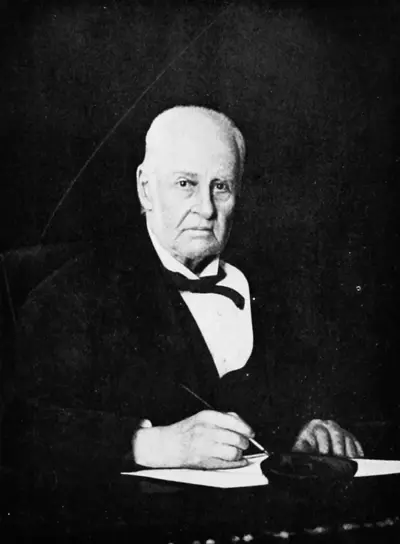
Joseph Easton Gary was judge who presided over the trial of eight anarchists tried for their alleged role in the Haymarket Riot. Born in Potsdam, New York, USA, he worked as a carpenter, then moved to St. Louis in 1843 to study law. He was admitted to the bar in 1844 and practiced for five years in Springfield, Missouri. In 1849 he moved to Las Vegas, which was then part of the State of Deseret, and established a practice there. He then moved after three years to San Francisco, then to Berlin, Wisconsin, before moving to Chicago in 1856.
