Patrick Henry Quotes
The Constitution reflects in the most degrading and mortifying manner on the virtue, integrity, and wisdom of the state legislatures; it presupposes that the chosen few who go to Congress will have more upright hearts, and more enlightened minds, than those who are members of individual [state] legislatures.
Many state officials have always felt that way. However, history has shown that while no model of perfection, the Congress has been less corrupt than the state legislatures. Many leave state legislatures to run for Congress; almost no one leaves Congress to run for the state legislature.
Patrick Henry, 1736-1799, Member, Virginia House of Burgesses, Member of the Continental Congress, Governor of Virginia, Member, Virginia Constitutional Ratification Convention, Debate, Virginia Convention on the ratification of the U. S. Constitution, June 1788
Sourced by: Eigen's Political and Historical Quotations

The 10th Amendment was created to take care of this objection which Jefferson and many others had.

This is a classic type of fallacious political logic. The author claims that there are no powers in the constitution to make laws in a number of important areas of our society. What is true, is that there is no explicitly and uniquely specified statements in the Constitution regarding the areas he specified (and some he didn’t like education). However the power to make laws in these areas comes from the “Commerce Clause” where the Federal Government was given the power to regulate Interstate Commerce. And that is what the Federal Government does make laws about. Food that is sold in the state where it is grown is regulated by the states. But interstate agriculture is. Medicines and weapons are also sold and transported in interstate commerce. Even housing is in part covered as financing and mortgages, building materials, working conditions of the building companies are part of Interstate Commerce. A succession of Congresses have recognized this and so has every Supreme Court in our history. McManus however believes that all these legislators and judges have been wrong and worse, part of a conspiracy to subvert the Constitution. See {630683} for his tendency to see conspiracies in politics.

Marshall is famous for, as Chief Justice, establishing the principle that the Judiciary can override Congress and the Executive in determining Constitutionality. However, as this quotation illustrates this principle had been discussed in open debate on the ratification of the Constitution. It was not simply a grab for power by a Chief justice; he uttered this quotation long before he ever suspected he would be a judge but actually spent much of his career in the executive and legislative branch of government.

The view that the Supreme Court was the final arbiter of constitutional controversies was not held in early America.


This proposed Constitutional Amendment was debated just before Abraham Lincoln would take office. The South wanted to tie his hands on the Slavery issue, and wanted to end what had become a constant polarized Congressional debate over slavery. Of course, their idea of ending the debate was to Constitutionally prohibit further attempts to outlaw or otherwise interfere with slavery in the Southern states. A number of Northern members of Congress voted for it realizing that there was little or no chance of obtaining the ratifications of ¾ of the states and they wanted to buy some time for the Southerners to calm down over their fear of Lincoln and his upstart Republican party. The Amendment never obtained the needed votes though a few states did ratify it. Secession and the Civil War mad the amendment moot. The Southern position was so rigid, that they would compromise in no way on the slavery issue, and ended up of course losing more than they ever thought was possible by succeeding. Another reason this proposed amendment is historically important, is that it is yet another strong piece of evidence that the issue of the Civil War was slavery and not differences in political and economic philosophies as many Southerners have claimed since then. If States Rights in general were the great concern, would have been no reason to single out slavery if it were not the major issue. Yet the last phrase, “including that of persons held to labor or service by the laws of said State” does just. Similar evidence is given by the Secession Resolutions of the Southern States and the debates around them. It is clear that slavery was the issue that the South fought over.


This hypocrisy and insincerity was seen for what it was by the Radical Republicans, Abolitionists and the newly freed slaves themselves. See {617728} and {617339}. However, this approach soon was adopted as the “party line” by intellectual Southerners of the time, and has continued to this day. The rebellion that caused the deaths of more Americans than all the rest of our wars, was not as they stated it caused by any conflict over slavery, no economic causes, no differences in labor philosophies and trade, no contention over control of new territories, but was simply an attempt to vigorously support and defend the Constitution. However, one advantage to using this story as an explanation of the bloody rebellion, was that the defeated Southerners could see their acts as somewhat nobly motivated.


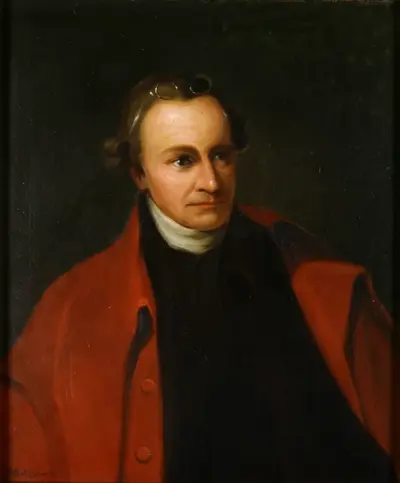
Patrick Henry was an American attorney, planter, politician, and orator best known for his declaration to the Second Virginia Convention (1775): "Give me liberty, or give me death!" A Founding Father, he served as the first and sixth post-colonial Governor of Virginia, from 1776 to 1779 and from 1784 to 1786.
