William H. Seward Quotes
The color of the prisoner’s skin, and the form of his features, are not impressed upon the spiritual immortal mind which works beneath. In spite of human pride, he is still your brother, and mine, in form and color accepted and approved by his Father, and yours, and mine, and bears equally with us the proudest inheritance of our race — the image of our Maker. Hold him then to be a Man.
William H. Seward, 1801-1872, Governor of New York (Whig), U.S. Senator (Whig & Republican, NY), U. S. Secretary of State, Argument as defense attorney during the trial of an African-American criminal defendant, Auburn, New York, July 1846
Sourced by: Eigen's Political and Historical Quotations

He would not allow himself to be buried in a cemetery that would not allow Blacks. He was laid to rest in Shreiner's Cemetery, one of the very few racially integrated cemeteries at the time.

Knight led a band of whites and blacks who fought off the Confederate Troops sent to Jones County of Missisippi, to eleminate the Free State of Jones which tehy had set up, and seceded from the Confederacy. They had infuriated teh Confederate Government becasue it was an interracial community with a great deal of intermarriage and no discrimination agaisnt Blacks and they welcomed runaway slaves and white deserters from the Confederate Army.

This was the first of the famous Lincoln-Douglas Debates. The men were contesting for the U. S. Senate. Douglas won the election.

This was the first named Civil Rights Act passed in the United States. It was passed over the veto of President Andrew Johnson, a Southerner, who tried to thwart Congress’s efforts at Reconstruction.

This was surprising for a man who owned slaves all his life.

Connor turned out to have been of great assistance to the Civil Rights Movements. His red-neck, ignorant, virulent, irrational hatred and his position made him an iconic, living, hyperbole of the American Southern Racist.


3rd Earl Russell of Kingston. This is a wonderful example of scientific thinking about a politically and emotionally charged subject.

Lieber was assigned by President Lincoln to study the then international laws of war and prepare a manual for the guidance of union troops in the Civil War. Lincoln then issued the document as a general order. This statement was critical in inhibiting the South from making good on their threat to enslave any Black Union Soldier Captured and to execute any Union Black soldier who was a runaway slave from the South. Lincoln threatened to retaliate and also to hold senior Confederate officers accountable for following these rules. General Sherman and other Union Senior Officers executed a few Confederate soldiers who violated rules of the order and the “illegal” practices stopped, and with few exceptions the senior officers of both sides followed Lieber’s rules. These rules, with few modifications, governed U. S. military policies and rules through the Second World War.


She was one of the first prominent white southerners to denounce racial segregation. Also, she supported Martin Luther King’s protest organization in Montgomery long before most other whites.


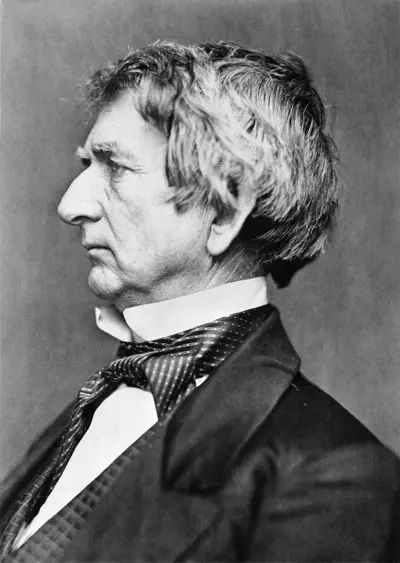
William Henry Seward was United States Secretary of State from 1861 to 1869, and earlier served as governor of New York and as a United States Senator. A determined opponent of the spread of slavery in the years leading up to the American Civil War, he was a prominent figure in the Republican Party in its formative years, and was praised for his work on behalf of the Union as Secretary of State during the Civil War.
