David E. Bell Quotes
The Bureau of the Budget is part of the Executive Office of the President and serves as an augmentation staff for the White House.
Precursor to the U. S. Office of Management and Budget. In the middle of the 20th century Congress allotted the White House only a small staff. The Presidency had grown much more complicated with many complex areas of expertise needed. So Presidents began to “borrow” staff from the Bureau of the Budget. Congress steadily increased the size of the White House staff until William Clinton slightly reduced the staff as a symbol of his balanced budget policies. All Presidents augment their staffs for special purposes by borrowing staff from other government agencies for specific needs. By modern standards the early Presidents had tiny staffs of just one secretary. Even in the Presidency of Abraham Lincoln he only had a military aide and two secretaries.
David E. Bell, 1919-2000, Economist & Director, U. S. Bureau of the Budget, Administrator of The U. S. Agency for International Development, 1947
Sourced by: Eigen's Political and Historical Quotations

After the Stock Market crash of 1929, Republican politicians promised "recovery is right around the corner." But La Guardia disagreed:


Under the Republican George W. Bush administration, the economic meltdown of 2008 triggered the Great Recession where the middle class bore the economic and emotional brunt. In 2012, the Republicans were in the midst of their primary elections for their Presidential nominee. There were 4 candidates in a vicious campaign where they trashed and attacked each other trying to pander to the right wing of the Party who tended to control the primaries. So all of the candidates were opposed to all the laws that Congress had made to prevent another economic disaster and in addition to repealing those, would roll back most of the executive orders and regulations to prevent another Banking debacle.


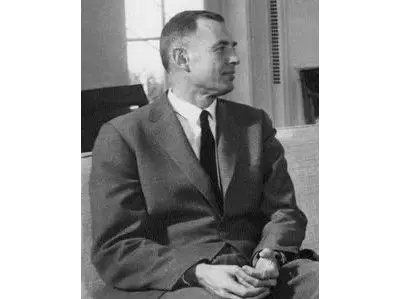
David Elliott Bell was a director of the United States' Office of Management and Budget from January 22, 1961 until December 20, 1962 under President John F. Kennedy. Kennedy named him administrator of the Agency for International Development in late 1962. He left government service in 1966 to become the Executive Vice President of the Ford Foundation.
