John A. Logan Quotes
The appointment of subordinates or the nominations for appointments are just as much a part of our [congress's] responsibility as any other which we have, and a share in those appointments ... is one of the recognized rights of the people.
John A. Logan, 1826-1886, U. S. Congressman & U. S. Senator (Democrat, IL), Congressional debate, 1869
Sourced by: Eigen's Political and Historical Quotations


Jefferson and many others thought the original drafting of the Constitution was deficient in not explicitly protecting rights from the government. See {586024}. When it came time for ratification, it was clear that ratification would not take place unless that was remedied and the Bill of Rights made the ratification possible by satisfying many critics of whom Jefferson was but one. Note that the protection sought was from the President and the Congress.

In 1949 the NATO treaty was signed. There was concern that a phrase in the treaty authorizing signatories to take "such action as it deems necessary, including the use of armed force" would undermine Congress's powers:


Note that early constitutional experts assumed that one of the President’s roles was to be non partisan and control partisanship. Note the phrase ‘prevent the artifices of party’. The early founders were very wary of political parties of ‘factions’ as Madison called them. However, most were extremely partisan although in the Presidency partisanship was toned down by George Washington but after him, partisan ship became the norm.


Vidal, a staunch liberal held this view along with many ultra conservatives end extreme liberals. The constitution requires the Congress to declare war, but they have not done so for any of the wars since WWII. The President assumed the war power. And the only coherent budgets began.


Though not very dramatic or succinct, this is a very important quotation in American History. The original drafters of the Constitution concentrated on limiting the powers of the executive—the role of the King. But the Congress had no limits placed on them. In Britain, to this day, the Parliament can do whatever they wish as there is no restraint on them other than their prudence and reasonableness. Madison used the example of the Alien and Sedition Acts—huge infringements on the rights of Americans—to show why the legislative branch must also be more restrained and limited. And that was the logic behind adding the Bill of Rights to our Constitutions.


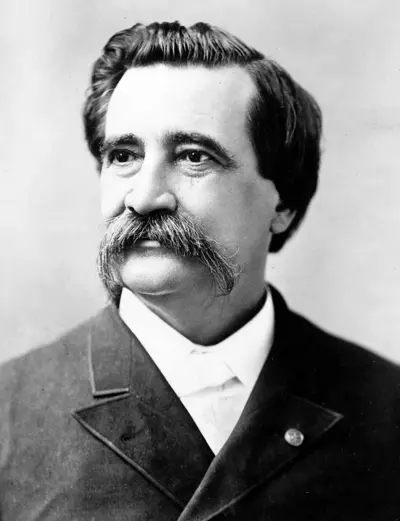
John Alexander Logan was an American soldier and politician. He served in the Mexican–American War and was a general in the Union Army in the American Civil War. He served the state of Illinois as a State Senator, a Congressman, and a U.S. Senator and was an unsuccessful candidate for Vice President of the United States with James G. Blaine in the election of 1884. As the 3rd Commander-in-Chief of the Grand Army of the Republic, he is regarded as the most important figure in the movement to recognize Memorial Day (originally known as Decoration Day) as an official holiday.
