George Bernard Shaw Quotes
The American Constitution, one of the few modern political documents drawn up by men who were forced by the sternest circumstances to think out what they really had to face, instead of chopping logic in a university classroom.
Shaw, George Bernard. Preface. The Apple Cart: A Political Extravaganza, Constable and Company, 1930, p. ix.


at the NSA collection of every American’s private e-mails, phone calls, and other digital communications. Referring to the NSA program of collecting information on all electronic communications of all American Citizens. See {636963} for more on the case.
There are many Americans who resent the fact that states and localities publish official documents in Spanish and other foreign languages as well as English. They often argue that the Founders wanted English to be the only language of the American government. It comes as a shock and surprise that the Constitution was published in English AND German to reach the many German immigrants who were a part of early America.


Most of the delegates to the Constitutional Convention were aristocrats, and all were elites of different types. However, they wanted and knew that they would have to submit their work product to the people for ratification. So while each had their own views, most were heavily influenced by their perception of public opinion reaction to their draft. Even with that, in order to get the ratification votes, they had to add the first 10 amendments—the Bill of Rights in order to get the votes of the men who were NOT at the convention.


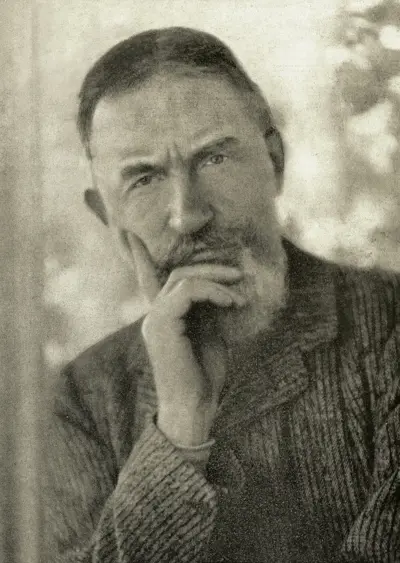
George Bernard Shaw, known at his insistence simply as Bernard Shaw, was an Irish playwright, critic, polemicist and political activist. His influence on Western theatre, culture and politics extended from the 1880s to his death and beyond. He wrote more than sixty plays, including major works such as Man and Superman (1902), Pygmalion (1912) and Saint Joan (1923). With a range incorporating both contemporary satire and historical allegory, Shaw became the leading dramatist of his generation, and in 1925 was awarded the Nobel Prize in Literature.
