Benjamin Franklin Quotes
That it is better 100 guilty Persons should escape than that one innocent Person should suffer, is a Maxim that has been long and generally approved.
Franklin, Benjamin. "Letter to Benjamin Vaughan." 14 Mar. 1785. The Writings of Benjamin Franklin, edited by Albert Henry Smyth, vol. 9, Macmillan, 1906, p. 293.


This is the first appearance of the principle which guides law enforcement in most of America and the other industrialized democracies around the world. Texas and some other localities have rejected this notion and see the occasional execution of an innocent person the cost we must pay in order to preserve law and order.


It is surprising that these ideas would come from one of the most autocratic powerful monarch in the world at the time. However there were many very liberal influences on her from Europe. This set of proposals she even sent to Voltaire to get his feedback and criticism.


This quotation has become an operational principle of most justice systems of industrial democracies.

This quotation is a great example of the difficulty of deciding some of the major Constitutional issues. Most reasonable people believe that Rehnquist certainly has a point. On the other hand, critics observe that this quotation essentially says that it is OK to convict an innocent person if it cost too much or be too much trouble to do so. Reasonable people would also agree that this objection has much merit also. So the judicial system is stuck with deciding when the cost or trouble is too much. There will never, can never, be a clear cut answer.


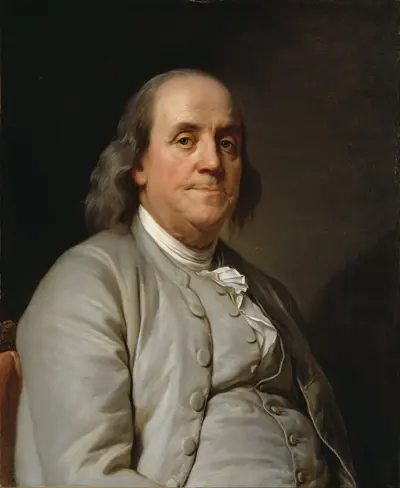
Benjamin Franklin FRS FRSA FRSE was one of the Founding Fathers of the United States. A polymath, he was a leading writer, printer, political philosopher, politician, Freemason, postmaster, scientist, inventor, humorist, civic activist, statesman, and diplomat. As a scientist, he was a major figure in the American Enlightenment and the history of physics for his discoveries and theories regarding electricity. As an inventor, he is known for the lightning rod, bifocals, and the Franklin stove, among other inventions. He founded many civic organizations, including the Library Company, Philadelphia's first fire department, and the University of Pennsylvania.
