Lee C. Bollinger Quotes
… technologies that convene different cultures do not always help them interact peaceably.
Lee C. Bollinger, President of Columbia University, “Freeing Speech”, The Washington Post, February 15, 2015
Sourced by: Eigen's Political and Historical Quotations


He was one of the first democratic politicians of Germany who argued for rapprochement between France and Germany and may have been the first to suggest a European Union. Most of the world was very distrustful of German nationalism, and Stresemann presented one of the positive aspects of it. He died of a stroke in 1929 and the political vacuum was eventually filled by Hitler and the Nazis as the Weimar Republic was short lived. As democratic as Stresemann was, he still was preoccupied with German territorial control. See {620664}.


Fiji is a nation which at the time was beset with ethnic strife and tension. In addition to the religious tension there were Indian immigrants who tended to be economically more successful than the indigenous Fijians. There was an English tradition from the days of being a British Colony and the traditional tribal leaders and chiefs were being disenfranchised by modern democratic structures. The military was not under the control of the civilian government and coups pitted some ethnic groups against others.

Lawrence of Arabia. It is amazing that this principle has been so ignored by otherwise very sophisticated countries trying to influence the third world.

One of the great successes of the expedition was the result of Lewis and Clark not only following these instructions but going to extremes of avoiding violence in almost all cases despite some provocation.
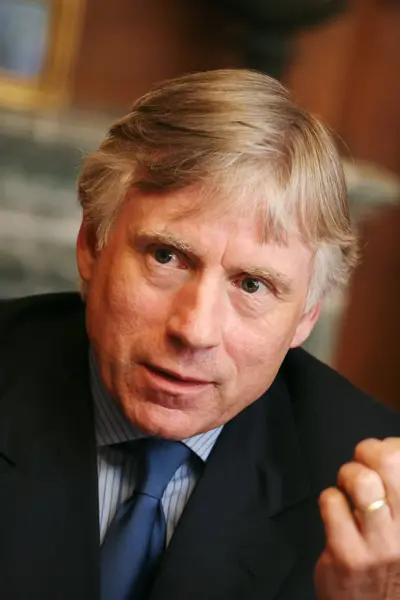
Lee Carroll Bollinger is an American lawyer and educator who is serving as the 19th and current President of Columbia University, where he is also the Seth Low Professor of the University and a faculty member of Columbia Law School. Formerly the president of the University of Michigan, he is a noted legal scholar of the First Amendment and freedom of speech. He was at the center of two notable United States Supreme Court cases regarding the use of affirmative action in admissions processes. In July 2010, Bollinger was appointed chair of the Federal Reserve Bank of New York board of directors for 2011. Previously, he had served as deputy chair. In 2004, he was honoured to be a member of the American Philosophical Society.
