John Stuart Mill Quotes
Strange it is that men should admit the validity of the arguments for free speech but object to their being "pushed to an extreme", not seeing that unless the reasons are good for an extreme case, they are not good for any case.
John Stuart Mill, 1806-1873, Member of Parliament, British Political Economist, On Liberty, 1859
Sourced by: Eigen's Political and Historical Quotations


This became a critically important quotation a half century after it was made. Judge Hand articulated the majority Western and Judeo-Christian value proposition between dissent and heresy. However, for the majority of the Islamic world, the reverse represents the majority value that is held. There is a minority in the West that agrees that avoidance of heresy is paramount and a minority of the Muslim world that agrees that the protection of dissent is the more important value, but the two civilizations were at odds in the 20th and 21st centuries. However, Islam is about 600 years younger than Christianity. 600 years ago, the Christian world agreed with the Muslim society and prevention of heresy was the more important value. The Reformation and the enlightenment followed by the world example of America produced a transformation and this may occur in the majority of the Islamic world in time.

The 1st Amendment is almost absolute in its protection of speech. However, ironically the Untied States has much less internecine conflict with minorities better off than the nations where hate speech is illegal and criminal.
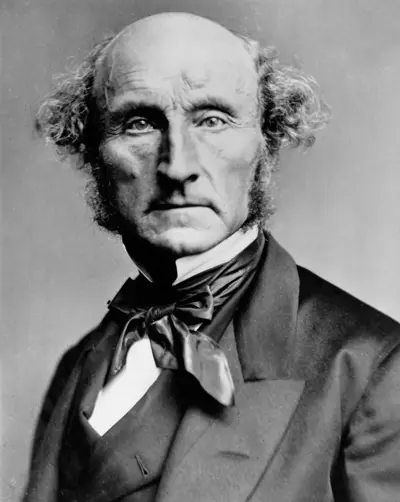
John Stuart Mill, usually cited as J. S. Mill, was an English philosopher, political economist, Member of Parliament, and civil servant. One of the most influential thinkers in the history of classical liberalism, he contributed widely to social theory, political theory, and political economy. Dubbed "the most influential English-speaking philosopher of the nineteenth century", he conceived of liberty as justifying the freedom of the individual in opposition to unlimited state and social control.
