Hugo Black Quotes
Freedom of speech means that you shall not do something to people either for the views they express, or the words they speak or write.
Hugo Black, 1886-1971, U. S. Senator (Democrat, AL), U. S. Supreme Court Justice, One Man's Stand For Freedom, 1963
Sourced by: Eigen's Political and Historical Quotations


Many Turks deny that there was a genocide and claim that the Armenians were conspiring with the Turkish Russian enemies. In order to stop the public discussion of the subject, they went to a local court and got a judge to rule that they could not use a public university for such a controversial subject. The Prime Minister and other Turkish leaders were outraged. Quickly a private university offered to provide the facility for the event with the original participants still involved. However Erdogan has had two political faces in his career—one as a moderate reformer where freedom of speech was values, and the other as the head of an Islamic political party where Islamic law makes some kinds of speech a capital crime (Heresy and blasphemy).

In 1989 the leader of Iran, Ayatollah Khomeini, claimed that Salmon Rushde, a British author and Iranian native, had written a blasphemous book and should therefore be killed. Not all Muslim spiritual leaders agreed:. 6 weeks after making this statement on television, he himself was assassinated.
Striking down a law making cross burning a crime:


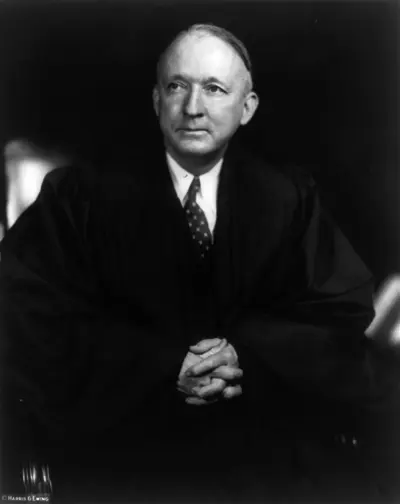
Hugo Lafayette Black was an American lawyer, politician, and jurist who served as a U.S. Senator from 1927 to 1937 and as an Associate Justice of the Supreme Court of the United States from 1937 to 1971. A member of the Democratic Party and a devoted New Dealer, Black endorsed Franklin D. Roosevelt in both the 1932 and 1936 presidential elections. Having gained a reputation in the Senate as a reformer, Black was nominated to the Supreme Court by President Roosevelt and confirmed by the Senate by a vote of 63 to 16 (six Democratic Senators and 10 Republican Senators voted against him). He was the first of nine Roosevelt appointees to the Court, and he outlasted all except for William O. Douglas.
