Jean-Baptiste Say Quotes
Still how unenlightened and ignorant are the very nations we term civilized!
Jean-Baptiste Say, 1767-1832, French economist and journalist, A Treatise On Political Economy: or the Production, Distribution, and Consumption of Wealth
Sourced by: Eigen's Political and Historical Quotations


This statement was widely interpreted to be a statement of Western Christian superiority over the Muslim world.


This seems counter intuitive, but Stenner is not referring to the reaction of all people. She argues that such programs do not change the behavior of those who are already tolerant and accept multiculturalism and pluralism, and and often backfire with people we would like to be more tolerant because the primary reason for their intolerance is an authoritarian personality. These people cannot fare well with all the differences and little that is structured as right. She and others who have had experience with authoritarian personalities urge that we not try and persuade the of the desirability of allowing a society to have many different cultures with no dominant norm. Instead, they urge that programs to make authoritarian personalities behave with tolerance is to take a very rigid and authoritarian approach. The Government has made laws that requires all American citizens to be tolerant of different races, genders, cultures, sexual orientation. To maintain the unity of our society, we all most behave that way. Liberals, often find this hard to do as to them tolerance is such a fundamental value that everyone should accept it as desirable and see its virtue—they want hearts and minds. Steiner argues that they should forget about hearts and minds reading tolerance. With authoritarian personalities, get the behavior and leave it at that. For them the moral appeal is to obey the law.

He did not originate the idea but credits an unknown French scientist. However herein and in speeches he acknowledged it as his credo.


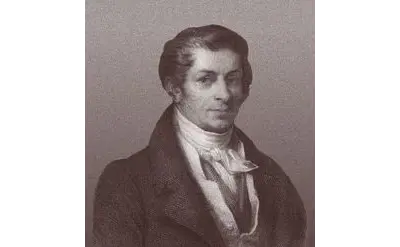
Jean-Baptiste Say was a liberal French economist and businessman who argued in favor of competition, free trade and lifting restraints on business. He is best known for Say's law—also known as the law of markets—which he popularized. Scholars disagree on the surprisingly subtle question of whether it was Say who first stated what is now called Say's law. Moreover, he was one of the first economists to study entrepreneurship and conceptualized entrepreneurs as organizers and leaders of the economy.
