David Brooks Quotes
Someone should put up a chart for Congress showing the difference between millions, billions, and trillions. Our problems are in trillions and Congress is arguing about millions.
David Brooks, Political Journalist & Columnist, PBS News Hour, September 2, 2011
Sourced by: Eigen's Political and Historical Quotations


Although the Professor was often right about this technique, at the time he made this statement, the Clinton administration was actually cutting spending and using much of the revenue to pay for the deficit—just the opposite of what the Professor was worried about. It was successful and the deficit was eliminated and surpluses were projected. However the succeeding administration more closely followed the professor’s pattern and increased spending enormously for serious needs, but also cut taxes, so that we went during the Bush administration from the largest projected surplus in American history to the greatest deficit in American history.

By the time the debt ceiling needs a Congressional vote, the money has already been obligated and spent. That is when Congress can control spending. The debt ceiling is ALWAYS increased by Congress when asked otherwise the U. S. would not be able to pay its bills. However, many members of Congress like the fact that every year or so the administration needs their votes so they can extract benefits for their constituents more easily with that leverage.


The problem was that special interests—and Congress—all wanted a piece of the pie, and were unrelenting in their demands on the President to create funded programs for them.


After the Stock Market crash of 1929, Republican politicians promised "recovery is right around the corner." But La Guardia disagreed:


The United States has an unusual set of laws with respect to paying the nation’s bills. Congress must vote for the budget which authorizes and triggers the buying and spending. Then when it comes to paying for what has been bought, Congress must vote again to raise the debt ceiling so the national can pay for what Congress has already directed to be bought. Congress, in 2012 and 2013, voted to spend the money and then balked at authorizing the administration to borrow the money to pay the bills.
_0_thumbnail_47x47.jpg "Bill White, Mayor of Houston, Texas")

The Dutch King’s brother, Emperor Napoleon Bonaparte Bonaparte, insisted on Dutch contributions to his war effort in the way of Dutch troops, ships and provisions. Yet there was not enough possible revenue to pay for such a war effort. Gogel was able to introduce efficiencies in many areas but still more taxes were needed. War expenditures took all the resources of the state and progress stopped and the kingdom was almost destroyed by the economic crisis.


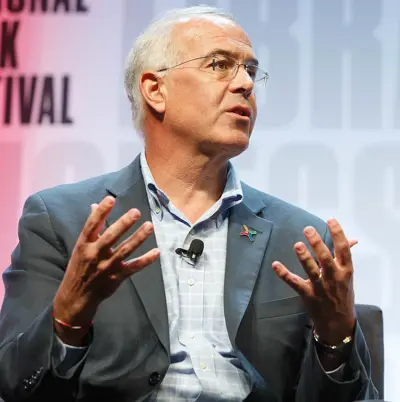
David Brooks is a conservative political and cultural commentator who writes for The New York Times. He has worked as a film critic for The Washington Times, a reporter and later op-ed editor for The Wall Street Journal, a senior editor at The Weekly Standard from its inception, a contributing editor at Newsweek, and The Atlantic Monthly, and a commentator on NPR and the PBS NewsHour.
