Ralph Waldo Emerson Quotes
Solvency is maintained by means of a national debt, on the principle, "If you will not lend me the money, how can I pay you?"
Emerson, Ralph Waldo. "Wealth." English Traits, Phillips, Sampson, and Company, 1856, p. 162.


At the time there was a worldwide recession and although the United States economy was not in very good shape, it was better than the other democracies and those nations with better economies then were authoritarian governments where investors did not trust their currencies. As a result, many wealthy people and businesses throughout the world were willing to lend money to the United States as a safe haven.

Almost every major corporation that is growing must borrow money to finance the growth. There is a great temptation to do this continuously, as if all works out the borrowed money is paid back and the nation has grown. However, not every investment succeeds, and when they do, few nations will take the growth and save it for a future date when a national investment does not work out as well as hoped. Gradually national debt as a proportion of the economy gets larger and larger and it makes mew investments more and more difficult to succeed because of the higher rates of interest that must be paid. Every modern country must find a balance. Those that do not can have a financial disaster such as Greece in the early part of the 21st century.


Debts accumulated by the allies in World War I was still outstanding a decade later. When it was proposed that the United States help reduce this debt, President Coolidge remarked:
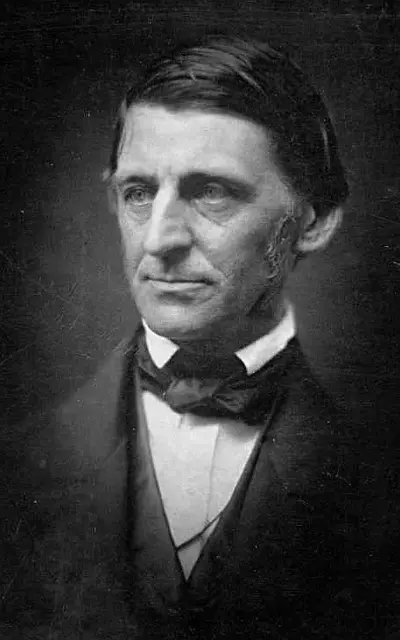
Ralph Waldo Emerson, who went by his middle name Waldo, was an American essayist, lecturer, philosopher, abolitionist and poet who led the transcendentalist movement of the mid-19th century. He was seen as a champion of individualism and a prescient critic of the countervailing pressures of society, and he disseminated his thoughts through dozens of published essays and more than 1,500 public lectures across the United States.
