Brent Scowcroft Quotes
So far the changes in the president in his second term have been mainly of a rhetorical nature.
Scowcroft, Brent. "We Cannot Export Values." Der Spiegel, Spiegel-Verlag, 31 Oct. 2005.


Hoover had to cope with the Great Depression. His administration was hapless in improving the economy as he was in a philosophical bind in that he was opposed in principle to doing almost anything that would help the situation. He just did not believe that government should engage in the activities that were necessary. His 1932 campaign had him trying to explain his thinking as to why government should not do much. Stimson and many other Republicans disagreed as so many Americans were suffering so badly. However, most publicly supported their party’s President even as many had private misgivings. Hoover was thrown out of office in an FDR landslide win. His policies government activist policies and programs improved the economy but it tool almost a decade to recover.

Canes-Wrone developed Conditional Pandering Theory. The very popular Presidents do not have to engage in pandering. The unpopular presidents will not be helped much so they have little to gain by using this technique which is personally distasteful to almost all politicians. It is the middle of the road Presidents who tend to make the biggest use of policy pandering.

Politicians being interviewed and asked about their interest in higher positions are always reluctant to say that they are. Too much political ambition is unseemly with voters. However, if the politician claims little or no interest, if he chooses to run later, is accused of lying or being deceptive. So he/she tends to be ver evasive and find a way of claiming no present interest—saying ‘no’ but leaving loopholes for a later flip flop and change of mind.


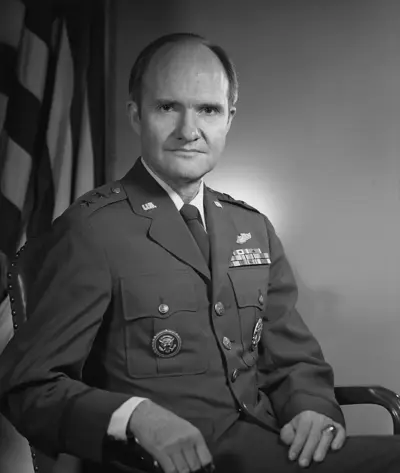
Brent Scowcroft was a United States Air Force officer who was a two-time United States National Security Advisor, first under U.S. President Gerald Ford and then under George H. W. Bush. He served as Military Assistant to President Richard Nixon and as Deputy Assistant to the President for National Security Affairs in the Nixon and Ford administrations. He served as Chairman of the President's Foreign Intelligence Advisory Board under President George W. Bush from 2001 to 2005, and advised President Barack Obama on choosing his national security team.
