Dean Acheson Quotes
Since world demand [for foreign aid] exceeds are ability to supply, we are going to have to concentrate our emergency assistance in areas where it will be most effective.
Dean Acheson, 1893-1971, U.S. Secretary of State (Democrat), Speech, Cleveland, MS, May 7, 1947
Sourced by: Eigen's Political and Historical Quotations


In many cases the American contractors hire locals in the recipient country and so a large part of the contractor’s funds actually go to the country. One virtue of this is that in many countries where the money is given to government or a local organization, there is a great deal of corruption and favoritism. Clinton is right that there is an additional cost where the American contractor takes a profit and an overhead, but very often this “waste” is far less than the waste produced by the recipient government itself or a local organization. The worst of both worlds exists when the American contractor succumbs to local pressures and government “suggestions” and does not buy from the low bidder or gives jobs to people who are not as competent as others or often not competent at all.


His definition of foreign aid given in this quotation is a classic example of political rhetoric. It is exaggerated somewhat, but basically true. The poor in America do not really pay much in taxes that would pay for foreign aid. However the middle class does. In the foreign counties much of the foreign aid money gets siphoned off by graft and corruption which is inevitably dominated by some of the rich of the country. Even if the money is spent without any graft or bribery, materials have to be procured and labor has to be supplied and foreign rich people own the companies which make the profits selling goods, labor and services to the foreign aid projects. In some nations the rich had set up a two-tier pricing for their products and services. One for normal business and commerce; a higher one for foreign aid projects.
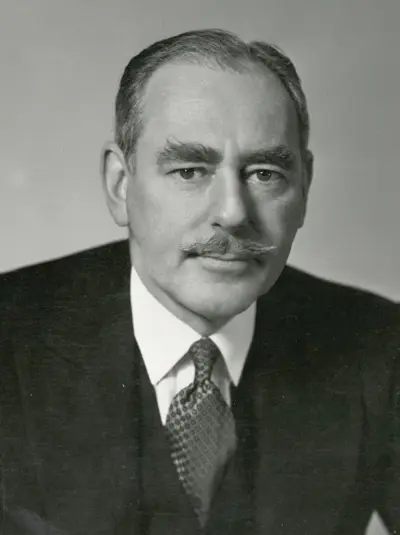
Dean Gooderham Acheson was an American statesman and lawyer. As United States Secretary of State in the administration of President Harry S. Truman from 1949 to 1953, he played a central role in defining American foreign policy during the Cold War. Acheson helped design the Marshall Plan and was a key player in the development of the Truman Doctrine and creation of the North Atlantic Treaty Organization.
