Lee H. Hamilton Quotes
Foreign aid is neither a failure nor a panacea. It is, instead, an important tool of American policy that can serve the interests of the United States and the world if wisely administered.
Hamilton, Lee H. "The Case for Foreign Aid." The Center on Congress at Indiana University, 2006.


The minute improvements taken together over time has almost always produced little or no significant or meaningful improvements. Much and often most of the donor money gets squandered on corruption, PR, and incompetence of recipient governments.


Passman’s committee controlled foreign aid appropriations and there was considerable political hostility to the U. S. aid program as it had been implemented by Kennedy and Eisenhower. Johnson was concerned that if he did not maintain the same level of foreign aid that JFK had, the change would be misinterpreted by most countries who did not realize that this was a domestic political squabble.

At the time the Permanent China Seat in the United Nations was held by Chang Kai Chek and his nationalist forces who had abandoned the Chinese Mainland and were holding out on the island of Formosa (Taiwan). The Chinese Communists who represented 800 million Chinese wanted the China Seat. Most of the world saw the solution as recognizing the two de facto Chinas and having them both in the U. N. The Communists insisted that there was only one China and they were the legitimate representatives. The Nationalists, ironically took the same one China position, deluding themselves into thinking that they would get control of the Mainland. They put pressure on the U. S. and we adopted the “One China” policy which was adopted by most of the world. Soon it became evident that Taiwan was a small island of people who represented no one else in China, and the single Chinese seat went to the Communists. Later, many in Taiwan regretted the one China policy and would have loved to be recognized as an independent country.


The “gentlemen: were 4 ultraconservative members of Congress who objected to our sending surplus food to India when they had a terrible famine. India was “non-aligned” in the Cold War and the Congressmen did not want to send them food unless they allied with us against the Russians. India was a fledgling democracy at the time and was vulnerable to bad weather and crop failure. Once, our food helped them get on their feet, they improved their agricultural production and today they have sufficient food stored so that they can survive major agricultural crises.

In many cases the American contractors hire locals in the recipient country and so a large part of the contractor’s funds actually go to the country. One virtue of this is that in many countries where the money is given to government or a local organization, there is a great deal of corruption and favoritism. Clinton is right that there is an additional cost where the American contractor takes a profit and an overhead, but very often this “waste” is far less than the waste produced by the recipient government itself or a local organization. The worst of both worlds exists when the American contractor succumbs to local pressures and government “suggestions” and does not buy from the low bidder or gives jobs to people who are not as competent as others or often not competent at all.


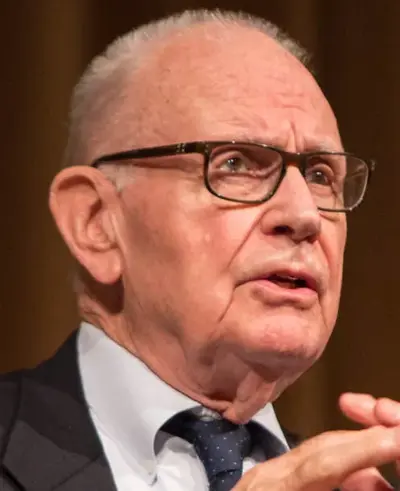
Lee Herbert Hamilton is an American politician and lawyer from Indiana. He is a former member of the United States House of Representatives and a former member of the U.S. Homeland Security Advisory Council. A member of the Democratic Party, Hamilton represented the 9th congressional district of Indiana from 1965 to 1999. Following his departure from Congress, he has served on a number of governmental advisory boards, most notably as the vice chairman of the 9/11 Commission.
